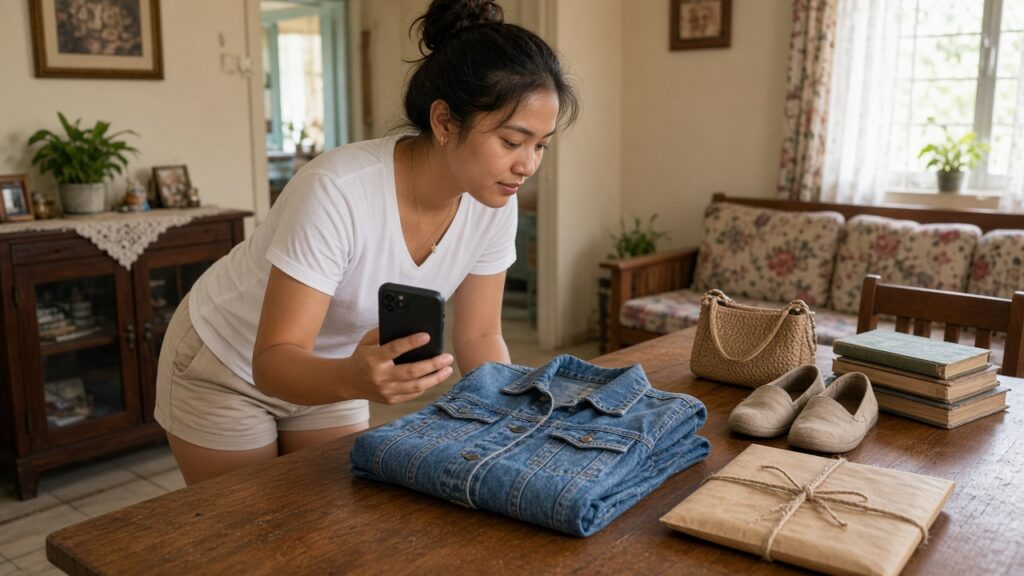
Yung jacket na isang beses mo lang sinuot. Yung sapatos na medyo masikip pala. Yung stroller na hindi na ginagamit ni bunso. Almost every Filipino home has a cabinet full of things that still work but just sit there. Selling them online is one of the simplest ways to turn clutter into a bit of extra cash, and you do not need capital, a store or special skills to start.
This guide walks you through how to sell preloved items online in the Philippines: what sells, how to price, how to take photos that get messages, how to get paid safely, and when the BIR starts to care. Let us be honest from the start: decluttering money is usually modest and one-time. It is a nice boost for your emergency fund or a bill, not a replacement for a salary.
Step 1: Decide what is worth selling
Go room by room and sort items into three piles: sell, donate or give away, and throw. Items that tend to move faster in the preloved market are the ones people would rather not buy brand-new at full price:
- Baby and kids’ items such as strollers, car seats, cribs, toys and clothes that children outgrow quickly
- Branded or good-quality clothes, shoes and bags in clean condition
- Gadgets and accessories such as old phones, tablets, earphones, chargers and consoles that still work
- Appliances and furniture such as electric fans, rice cookers, office chairs and small tables
- Books, school uniforms and review materials, especially near enrollment and board exam season
- Hobby gear such as bikes, musical instruments, camera lenses and sports equipment
Skip anything broken, unsafe, expired or that you are not allowed to resell. Never sell counterfeit goods, prescription medicine, or items you are not sure you own outright, such as a phone still under a postpaid plan or appliances bought on installment that are not fully paid yet.
Step 2: Pick where to sell
You do not need to be on every platform. Choose one or two where your buyers already are:
- Facebook Marketplace and local buy-and-sell groups. Good for bulky items and for buyers near you, since many prefer meetups or same-day delivery. Join groups specific to your city, subdivision or school.
- Online marketplaces and classified apps. Useful if you want a structured listing, built-in chat and, on some platforms, buyer and seller protection. Read each platform’s current fees and rules before listing, because commission and shipping policies change.
- Your own circle. A simple post on your own social media or a message to your family group chat often sells kids’ items and furniture fastest. Kakilala buyers also mean fewer scams.
Step 3: Take photos that sell
The photo is your salesperson. A blurry picture on a messy bed gets scrolled past. A few habits make a big difference:
- Shoot near a window in daylight. Natural light beats flash.
- Use a plain background such as a wall, a bedsheet or a table.
- Clean the item first. Wipe gadgets, wash and iron clothes, brush off shoes.
- Take several angles: front, back, label or brand tag, and close-ups of any defects.
- For clothes, add a flat-lay photo with a measuring tape so buyers can check the size.
Showing flaws honestly might feel like it hurts the sale, but it saves you from returns, bad reviews and long arguments in the chat.
Step 4: Write a clear listing
Buyers ask the same questions again and again, so answer them in the listing itself. A good listing includes:
- Title: brand, item, size or model, and condition, for example “Preloved denim jacket, size M, 9/10 condition”
- Condition: how long you used it and any marks, scratches or missing parts
- Measurements or specs: size, dimensions, storage capacity, inclusions such as box, charger or receipt
- Price: and whether it is fixed or negotiable
- Location and delivery options: meetup areas, pick-up, or courier booking at buyer’s cost
- Payment options: cash on meetup, bank transfer, GCash or Maya
Step 5: Price it realistically
The most common mistake is pricing based on what you paid, not what buyers will pay today. Before you post, search the same item on two or three platforms and look at listings in similar condition. Then:
- Price slightly above the lowest similar listing if your item is in better shape or includes extras.
- Leave a small allowance for tawad if you are open to haggling, and say “slightly negotiable” so buyers know.
- If nobody messages after a week or two, lower the price a little or improve the photos.
- Bundle small items, such as five kids’ shirts for one price, so they move together.
Remember that sentimental value does not transfer to the buyer. If an item will not sell at a fair price, donating it may be the better choice for your space and peace of mind.
Step 6: Get paid safely and avoid scams
Preloved selling attracts scammers because transactions are quick and between strangers. Protect yourself with these habits:
- Confirm payment in your own app, not from a screenshot. Fake GCash, Maya and bank transfer screenshots are a common trick. Open your account and check that the money actually arrived before you hand over or ship the item.
- Never share your OTP, PIN or password. No legitimate buyer needs your one-time PIN to “send” you money. Anyone asking for it is trying to get into your account.
- Do not click payment links sent by buyers. “Claim your payment here” links are a classic phishing setup.
- Meet in safe public places such as mall entrances, guardhouses or coffee shops with CCTV, during daytime, and bring a companion for expensive items.
- For couriers, use cash on delivery only through a platform or courier you trust, and keep your booking receipts.
- Watch out for overpayment tricks, where a buyer “accidentally” sends too much and asks you to refund the difference.
For more red flags, see our guide on how to spot money scams in the Philippines.
Step 7: Know when it becomes a business (and the BIR)
Selling a few of your own used things once in a while is decluttering. Buying items to resell, or selling regularly as a source of income, is a business. That difference matters.
The BIR has made clear that people doing business online must register. Under BIR Revenue Memorandum Circular No. 60-2020, online sellers must register their business or update their registration, issue invoices, keep books of accounts and file returns. Revenue Regulations No. 15-2024 later restated that every person engaged in trade or business, including online and social commerce, must register on or before starting the business.
If you sell through e-marketplaces, also know about Revenue Regulations No. 16-2023. Since January 2024, e-marketplace operators and digital financial services providers withhold 1% on one-half of gross remittances to sellers. This does not apply if your annual gross remittances from all platforms are ₱500,000 or below, but you may need to submit a BIR-received sworn declaration to the platform to show it.
For small registered sellers, the tax bill can be lighter than people fear. Under the TRAIN law, self-employed individuals with gross sales of ₱3 million or less may choose an 8% income tax on gross sales above ₱250,000 instead of graduated rates and percentage tax. Our 8% tax option guide and online business registration guide explain the steps.
The Internet Transactions Act of 2023 (RA 11967) also created the DTI E-Commerce Bureau to oversee online merchants and platforms. The law itself says consumer-to-consumer transactions are not covered, so a one-time sale of your old phone is different from running a shop. If you are unsure which side you fall on, ask your BIR Revenue District Office or a licensed accountant.
Step 8: Put the money to work
Extra cash from decluttering disappears fast if it just lands in your wallet. Give it a job before it arrives:
- Add it to your emergency fund.
- Pay down a high-interest debt, such as a credit card balance.
- Park it in a digital savings account for a specific goal like school fees or Christmas.
If you enjoy the process and want steady side income, look at our list of realistic side hustles in the Philippines, and treat reselling as a small business from day one: track your costs, register properly and never put in money you cannot afford to lose.
Quick checklist before you post
- Item is clean, working and legally yours to sell
- Three to six clear daylight photos, including flaws
- Title with brand, size or model and condition
- Price checked against similar listings
- Meetup spots and delivery options stated
- Plan to confirm payment in your own app before releasing the item
This article is general information only and not financial advice. Rates, rules and fees change, so please verify with the provider or the official agency before deciding.