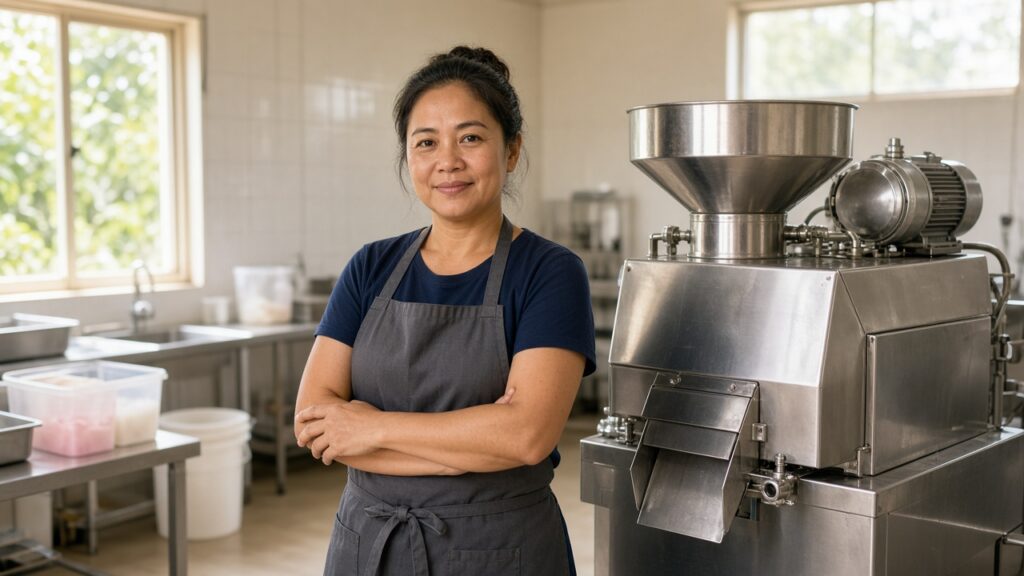
If your small business is already running but you are stuck because of old or manual equipment, the Department of Science and Technology (DOST) has a program worth knowing: the Small Enterprise Technology Upgrading Program, or DOST SETUP. It is not a dole-out and it is not free money. It is financial and technical assistance for equipment and technology that you refund to the government, but without interest. For a carinderia that wants a commercial freezer, a food processor that needs a vacuum sealer, or a furniture shop that wants better machines, that can be a big help compared with a bank or lending app loan.
Here is how SETUP works, who can apply, what you need to prepare and the honest trade-offs before you sign anything.
What is DOST SETUP?
SETUP is DOST’s flagship program for micro, small and medium enterprises (MSMEs). According to DOST-NCR, it supports MSMEs by providing:
- Seed funds for technology acquisition and equipment upgrading
- Technical trainings (for example, food safety programs like HACCP and Good Manufacturing Practices)
- Technical advisory and consultancy services, such as productivity and energy-efficiency assessments
- Design of functional packages and labels
- Support for product standards, including testing and calibration
- Database information systems
The current version is called SETUP 4.0, which DOST Region 02 describes as the agency’s response to Industry 4.0 and to the changes brought by the pandemic. According to a July 2026 BusinessWorld report, DOST says the program has helped more than 100,000 MSMEs since it started in 2002.
How much can you get, and how do you pay it back?
In the same BusinessWorld report, DOST Secretary Renato Solidum Jr. said eligible MSMEs can receive up to ₱5 million in assistance, repayable over three years, with repayment starting after the first year and carrying 0% interest. One beneficiary featured in the report, an auto parts and services shop in Batac, Ilocos Norte, received ₱1.1 million for equipment like a tire changer and wheel alignment machine.
Most approved amounts are much smaller than the maximum. For example, DOST Ilocos Region awarded ₱257,600 to a woodworks shop in La Union in March 2026. The amount depends on your project, your equipment quotations and what the evaluation committee approves.
A few more details come from the published SETUP guidelines (DOST Administrative Order No. 002, s. 2015). These are older rules, so confirm with your regional office whether they still apply:
- Funds for equipment, packaging and label execution, and laboratory analyses are for refund, while consultancy, training and other “soft” technical help are free of charge.
- Refunds start 12 months after the project begins, over three to five years depending on the project and your capacity to pay.
- The beneficiary submits post-dated checks covering the total assistance plus a technology transfer fee of 0.5% of the equipment’s acquisition cost.
- As your counterpart, you shoulder the insurance of the acquired equipment.
So “zero interest” does not mean zero cost. Budget for the insurance, the small transfer fee, and the monthly refund once the grace period ends.
Who can apply?
Based on DOST regional pages (DOST XII and DOST-NCR), SETUP is open to:
- Any company or individual firm based in the Philippines and wholly owned by Filipino citizens
- Micro, small and medium businesses that fall under the identified priority sectors
- Firms willing to apply technological improvements to their existing products, services or operations
- LGUs that want to apply technology to existing operations in their area (per DOST XII)
The 2015 guidelines also say the business should have been existing for at least three years when applying. This matches the requirement for three years of financial statements, so SETUP is generally for established businesses, not brand-new startups.
Priority sectors
The guidelines list these priority sectors: food processing; furniture; gifts, decors and handicrafts; agriculture, marine and aquaculture; metals and engineering; and others, including ICT and pharmaceuticals and health products. BusinessWorld also mentioned textiles among the industries supported. If your business is outside these, ask your Provincial Science and Technology Office (PSTO) first before preparing documents.
Documents you need to prepare
DOST XII and DOST-NCR list these requirements for SETUP funding:
- A full project proposal covering technical, marketing, management, financial and waste disposal aspects
- A letter of interest stating your commitment to refund the assistance, including your proposed refund schedule
- Business permits and licenses from your LGU and other government offices
- Financial statements for the past three years, signed by a CPA or registered accountant
- Projected financial statements for the next five years
- Business name registration from DTI, SEC or CDA
- A board resolution authorizing the application and naming signatories (for corporations, cooperatives and associations)
- Three quotations from suppliers or fabricators for each piece of equipment
- Complete technical design or drawing for equipment to be purchased or fabricated
DOST-NCR also posts templates on its SETUP page, including the letter of intent, sworn affidavit, board resolution and project proposal guides. If you have not registered your business name yet, see our guide on DTI business name registration.
How to apply, step by step
The process described by DOST XII goes like this:
- Submit a letter of interest to the DOST Regional Office or your Provincial Science and Technology Office.
- Undergo a Technology Needs Assessment (TNA). DOST experts visit or assess your business to identify what technology or equipment would actually help.
- Submit your full proposal with all the required documents.
- Evaluation by the Regional Technical Evaluation Committee (RTEC), a panel of experts that checks if your project is technically and financially viable.
- Funding allocation if your proposal passes.
- Final approval by the DOST Regional Director or a higher authority, depending on the amount.
After approval, you sign a memorandum of agreement, equipment is procured, and DOST monitors the project while you pay back on schedule.
Is SETUP right for your negosyo?
SETUP makes sense if:
- Your business has been operating for a few years with records of sales and expenses
- You know exactly which equipment will raise output, improve quality or cut costs
- Your cash flow can handle the monthly refund after the first year
- You are willing to keep proper books and submit reports
It may not fit yet if your business is very new, you do not have financial statements, or you need working capital for inventory rather than equipment. In that case, look at options like the SB Corp P3 loan, and consider BMBE registration for tax relief while you build your records.
A simple way to check if you can afford the refund
Take the amount you plan to request and divide it by the number of monthly refunds. For example, if your project is ₱300,000 and the refund period is three years (36 months), that is about ₱8,333 a month, plus insurance and the transfer fee. Now ask: will the new equipment increase your monthly profit by more than that? If the honest answer is “maybe,” refine your proposal or request a smaller amount. DOST’s evaluators will ask the same question.
Watch out for fixers and fake “DOST grants”
SETUP applications go through DOST regional and provincial offices. Be careful with Facebook pages or “consultants” who promise guaranteed approval for a fee, or who ask you to send money to a personal GCash or Maya account. Check your DOST regional office’s official website for contact details, and if you get scammed, here is how to report an online scam.
Quick recap
DOST SETUP gives qualified, Filipino-owned MSMEs equipment funding and technical help. DOST says assistance can go up to ₱5 million, refunded over three years at 0% interest with repayment starting after the first year, though most approved amounts are smaller. You will need permits, three years of financial statements, a solid proposal and supplier quotations. You also shoulder equipment insurance and a small technology transfer fee. Start by contacting your Provincial Science and Technology Office and asking for a Technology Needs Assessment.
This article is general information only and not financial advice. Rates, rules and fees change, so please verify with the provider or the official agency before deciding.