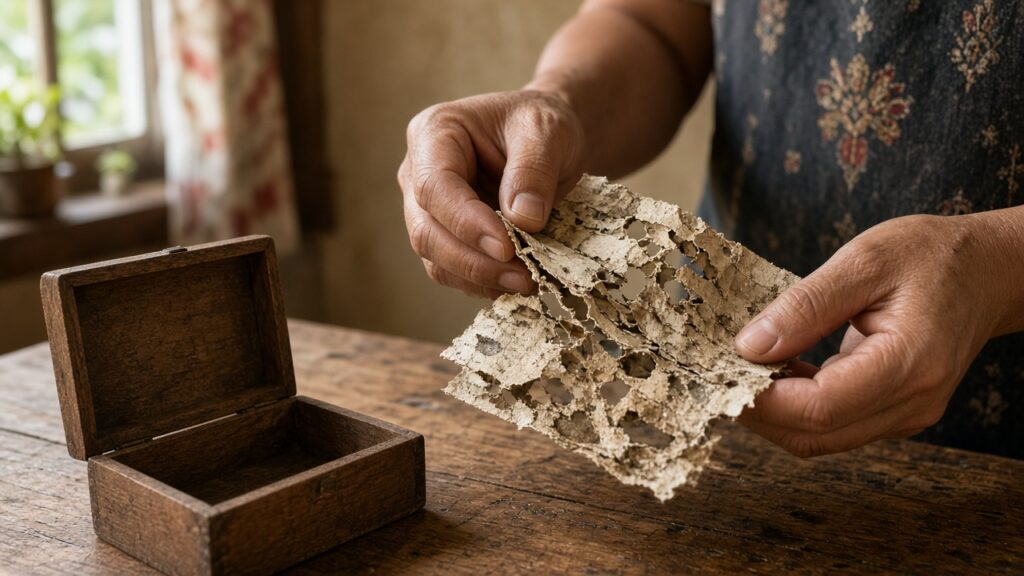
Binuksan mo ang lumang alkansya at may ₱500 na kinain na ng anay. Or a tindera hands you change and the ₱1,000 bill feels a little “off.” Or maybe a ₱100 bill got torn in half inside your pocket. Ano ang gagawin mo? Throwing it away or quietly passing it on can both cost you, and passing a fake can even get you in legal trouble.
The good news: the Bangko Sentral ng Pilipinas (BSP) has clear rules on which damaged bills can still be replaced, how to check if a bill is genuine, and what to do if you receive a fake one. Here is a practical guide.
Fit, Unfit, Mutilated, Counterfeit: Know the Difference
Under the BSP Clean Note and Coin Policy (BSP Circular No. 829, Series of 2014), money falls into a few groups, as explained in the BSP’s own #CurrencyLEGITeracy learning guide and a BSP reminder published by the Philippine Information Agency:
- Fit – clean, usable bills and coins. Keep using them.
- Unfit – paper or polymer bills that are dirty, soiled, limp, stained, have faded print or visible writing. Coins that are bent, twisted or corroded but still clearly identifiable are also unfit. You can exchange these at a bank free of charge or simply deposit them.
- Mutilated – bills damaged by burns, tears, holes or missing parts because of insects, chemicals, fire or other causes. Coins are mutilated when their genuineness or denomination can no longer be clearly determined. These are not exchanged on the spot; the bank forwards them to the BSP for examination.
- Counterfeit – a fake imitation of a genuine bill or coin made to deceive.
Important: a folded or crumpled bill is not automatically unfit or worthless. The BSP’s Polymer Series FAQs state that folded banknotes, whether paper or polymer, must be accepted in all payment transactions, and that paper banknotes remain legal tender alongside the polymer ones.
When Can a Damaged Bill Still Be Replaced?
The legal basis is Section 56 of the New Central Bank Act (Republic Act No. 7653). It says the BSP will not replace notes that are impossible to identify, coins that show signs of filing, clipping or perforation, and notes that have lost more than two-fifths (2/5) of their surface or all of their signatures (see the Supreme Court E-Library copy of the BSP rules).
In practice, the BSP guide lists these requirements for a mutilated bill to be redeemed:
- Size: at least 3/5 or 60% of the bill’s surface area remains.
- Signature: a portion of the printed signatures is still there.
- Security thread: the security thread is intact, except when the damage clearly comes from wear and tear, accidental burning, water or chemicals, or bites of rodents or insects.
Media reports call this the “3S rule” (size, signature, security thread). GMA News, citing the BSP, reported that at least 65% of the signature should remain. If unsure, let the BSP assess it.
For coins, the BSP guide says a coin can be redeemed if its genuineness or denomination can still be clearly identified and it does not show signs of willful mutilation such as filing, clipping or perforation.
How to have mutilated bills assessed
- Do not throw away any pieces. Gather every fragment, even the tiny ones. More surface area means a better chance of replacement.
- Do not try to clean, iron or glue the bills. Put them in a small box, envelope or plastic container so they don’t crumble further. The BSP advises banks to use appropriate containers for the same reason.
- Bring them to your bank. Under the BSP rules, banks are required to help process and submit mutilated currency to the BSP for examination. You may also go directly to the BSP Cash Department or a BSP regional office or branch.
- Wait for the BSP assessment. If approved, the replacement value is credited back through the bank. Ask the bank for a receipt or reference and the expected timeline, since processing times vary.
Termite and flood damage are common in Filipino homes. In one case reported by When In Manila, a man’s ₱25,000 in savings kept in a wooden box was eaten by termites. The lesson: cash savings are safer in a bank or a BSP-supervised e-wallet than in a cabinet.
How to Check if a Bill Is Fake: Feel, Look, Tilt
The BSP teaches a simple three-step check for the New Generation Currency (NGC) paper bills and the polymer bills. From the BSP’s learning guide:
1. Feel (Salatin)
- Security paper or substrate: genuine paper bills use abaca fiber and feel crisp, not like ordinary paper. Polymer bills feel like smooth, tough film.
- Embossed prints: the words “Republika ng Pilipinas,” the denomination and the portrait feel rough or raised.
- Tactile marks: raised marks help visually impaired people identify the denomination.
2. Look (Tingnan)
- Watermark: on paper bills, a shadow image appears when you hold the bill against the light. If you can see it clearly without backlight, be suspicious.
- Security fibers scattered on the bill, an asymmetric serial number whose characters grow in size, and a see-through mark that forms a complete image against the light.
- On polymer bills, check the clear window, which is part of the bill itself and not a stuck-on patch.
3. Tilt (Itagilid)
- Security thread and concealed value that appear as you change the angle.
- Optically variable ink, OVD patch and enhanced value panel on the higher denominations like ₱500 and ₱1,000, which shift color or show moving effects when tilted.
Don’t rely on just one feature. Do all three checks and compare a doubtful bill with one you know is genuine, especially in busy Christmas markets.
What to Do if You Receive a Fake Bill
This is where many people make an expensive mistake. According to the BSP guide:
- Do not pass it on. Under Article 168 of the Revised Penal Code, it is an offense to knowingly use, or possess with intent to use, a counterfeit note or coin. “Ipasa na lang” is not a safe option.
- Surrender it to the BSP through a BSP-supervised financial institution, such as your bank, or directly to the BSP. If the suspect bill turns out to be genuine, the BSP says you will receive full value for it. Counterfeits are kept by the BSP and not returned.
- Report suspicious activity. The BSP’s Payments and Currency Investigation Group (PCIG) handles counterfeiting cases and can be reached at [email protected] or (02) 8926-5092, as listed in the BSP guide.
Practical tip for sellers: if a customer’s bill fails the Feel-Look-Tilt check, politely decline it before completing the sale. Once you accept it, the loss is usually yours.
Refused Because the Bill Is Folded or Old? Here’s Your Recourse
Some stores and drivers refuse folded polymer bills. The BSP FAQs say all individuals and establishments must accept paper and polymer banknotes, folded or not, and list where to report refusals:
- Banks and other BSP-supervised institutions: BSP, [email protected]
- Businesses: DTI, 1-DTI (384) or [email protected]
- Public transport operators or drivers: LTFRB, 1342 or (02) 8529-7111
One exception: the old New Design Series (NDS) bills first issued in 1985. These were demonetized, and the final deadline to exchange them with the BSP was December 29, 2017, according to GMA News and Philstar. Those reports said NDS bills would lose their value and could no longer be exchanged after the deadline, so treat them as collectibles, not spending money.
Take Care of Your Bills to Avoid Losses
Folding is fine, but deliberate damage is not. Willfully defacing, mutilating, tearing, burning or destroying Philippine currency is punishable under Presidential Decree No. 247 by a fine of up to ₱20,000 and/or imprisonment of up to five years, as stated in the BSP guide. The BSP also advises:
- Do not write on bills (no “for tithes” or phone numbers).
- Do not staple, tape, or glue bills, and keep them away from chemicals and high heat. Never iron polymer bills.
- Keep bills flat in a wallet and coins in a coin purse.
Quick Checklist
- Dirty, limp or written-on bill: exchange or deposit at any bank, free.
- Torn, burned or termite-eaten bill: keep all pieces and bring them to your bank or the BSP for assessment. At least 60% of the bill plus part of the signatures and an intact security thread generally qualifies.
- Doubtful bill: Feel, Look, Tilt. If it is fake, do not pass it on; surrender it to your bank or the BSP.
- Folded bill refused: it is still legal tender. Report to the BSP, DTI or LTFRB depending on who refused it.
- Large cash savings at home: consider moving them to a bank to avoid anay, flood and fire losses.
A damaged bill is not always lost money. Knowing these rules can save you a few hundred, or even a few thousand, pesos.
This article is general information only and not financial advice. Rates, rules and fees change, so please verify with the provider or the official agency before deciding.