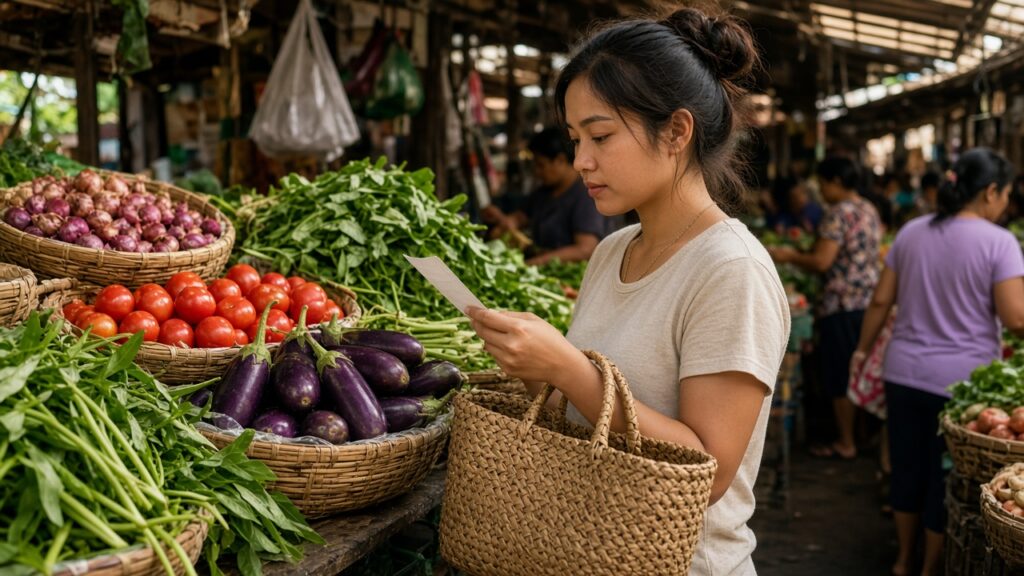
Kapag pumunta ka sa palengke o grocery ngayon, ramdam mo agad: mas kaunti ang laman ng bayong pero pareho o mas malaki pa ang binayaran mo. Hindi lang ito pakiramdam. According to the Philippine Statistics Authority (PSA), food inflation rose to 6.8% in September 2026 from 4.6% in August, with rice prices up 20.3% year on year and vegetables up 10.7%. Headline inflation hit 7.2%, the fastest pace since early 2023.
We cannot control prices, but we can control how we shop. Groceries are one of the few big expenses you can adjust every single week, so small habits add up fast. Here are 12 practical, no-gimmick ways to save on groceries in the Philippines, whether you shop at the palengke, a supermarket, a sari-sari store or online.
1. Set a weekly grocery budget, not a monthly one
A monthly budget is easy to blow in the first two weeks, especially right after sahod. Divide your monthly food budget by four (or by the number of paydays) and treat each week as its own limit. If your household spends ₱12,000 a month on food, that is about ₱3,000 a week. Bring that amount in cash, or move it into a separate GCash or Maya wallet, so you can see exactly how much is left while shopping.
2. Plan your ulam for the week before you shop
Meal planning sounds boring, but it is the single biggest money saver. Write down five to seven ulam for the week, then list only the ingredients you need. Choose dishes that share ingredients: buy one whole chicken and turn it into tinola on Monday, adobo on Wednesday and chicken sopas on Friday. Planning also cuts “bahala na” trips to fast food when you get home tired and the ref is empty.
3. Check your ref and pantry first
Before writing your list, look at what you already have. That half pack of sotanghon, the can of sardinas at the back of the cabinet, the eggs near expiry. Build at least one or two meals around them. Food you throw away is money you already spent.
4. Always bring a list, and stick to it
Supermarkets are designed to make you buy more. End-cap displays, “buy 2 take 1” stacks and snacks near the counter are there for a reason. A written list protects you from impulse buys. A simple rule helps: if it is not on the list and it is not a true emergency, it waits until next week.
5. Know the fair price before you buy
You do not need to guess if a price is reasonable. The Department of Agriculture publishes daily market prices of rice, vegetables, fish and meat in its Bantay Presyo price watch. For canned goods, coffee, milk, noodles, soap and other basic necessities, the Department of Trade and Industry posts suggested retail prices (SRPs) on its e-Presyo page. Checking these once in a while gives you a feel for what is “tama lang” and what is overpriced.
6. Compare unit prices, not sticker prices
The bigger pack is not always cheaper. Compare the price per gram, per milliliter or per piece. For example, if a 155g can costs ₱20 and a bigger can of the same brand costs more than double for less than double the weight, the smaller can is the better deal. Many supermarkets show the unit price on the shelf tag; if not, use your phone calculator. This applies to rice, cooking oil, coffee and detergent too.
7. Buy in season and shop the palengke smartly
Vegetables and fruits that are in season are usually cheaper and fresher. When a typhoon hits vegetable-producing areas, prices of leafy greens can jump, so be flexible: if pechay is expensive this week, switch to kangkong, sitaw, kalabasa or munggo. At the palengke, going early gives you the best choice, while going near closing time can get you lower prices on items the vendor wants to sell out. Being a regular “suki” also helps, since many vendors give a small discount or extra to loyal customers.
8. Try store brands and simpler products
House brands of supermarkets are often cheaper than big-name brands for basics like rice, sugar, flour, tissue and dishwashing liquid. Try one at a time and keep the ones your family is happy with. Also, buy whole ingredients instead of pre-cut or pre-marinated versions; you pay extra for the convenience.
9. Buy in bulk only what you will actually use
Bulk buying from a wholesale store or a grocery “palengke day” can save money on rice, canned goods, soap and toiletries. But bulk only saves if you use it before it spoils. Perishables bought in bulk often end up in the trash. A good middle ground: split bulk purchases with family or neighbors, a classic “hatian” that keeps the savings without the waste.
10. Use the senior citizen and PWD grocery discount
If you have a senior citizen or a person with disability at home, make sure they use their special grocery discount. Under Joint Administrative Order No. 24-02, series of 2024, seniors and PWDs get a 5% discount on covered basic necessities and prime commodities such as rice, locally produced bread, fish, pork, chicken, eggs, fresh vegetables and fruits, milk, instant noodles, cooking oil, sugar and laundry soap.
The discount is capped at ₱125 per calendar week, equivalent to ₱2,500 worth of purchases, and unused discounts do not carry over. If the full ₱2,500 is used, it must cover at least four kinds of covered items. Bring the OSCA or PDAO ID (and, for representatives, the authorization the store asks for). According to the DTI, this is separate from the 20% statutory discount, it now also applies to online purchases, and it does not apply to registered barangay micro business enterprises and cooperatives. The items must be for the senior’s or PWD’s own consumption, so use it honestly.
11. Be careful with promos, freebies and “sale” signs
A promo only saves money if you were going to buy that item anyway. “Buy 1 take 1” on snacks you do not need is still extra spending. Also watch out for e-wallet and online grocery deals: a cashback voucher is nice, but delivery fees, minimum spend requirements and small “service fees” can wipe out the savings. Always look at the final total before you tap Pay.
12. Cut food waste at home
Saving does not end at the counter. Store vegetables properly (wrap leafy greens in paper or cloth before putting them in the ref), freeze meat in single-meal portions, and follow “first in, first out” so older items get used first. Turn leftovers into new meals: leftover rice becomes sinangag, leftover adobo becomes adobo flakes, and vegetable trimmings can go into soup stock. Every kilo you do not throw away is real money saved.
Sample weekly grocery plan for a family of four
Here is an example of how a ₱3,000 weekly budget could be split. These are example allocations, not official prices, so adjust based on your area and current market prices:
- Rice: about ₱600 to ₱800, depending on the variety and how much your family eats
- Protein (fish, chicken, eggs, pork, munggo, tofu): about ₱1,200
- Vegetables and fruits: about ₱500
- Condiments, oil, coffee, milk: about ₱300
- Household basics (soap, detergent): about ₱200
Track what you actually spend for a month. You will quickly see which category keeps going over, and that is where to focus first.
Bottom line
With food prices rising, there is no single trick that will cut your grocery bill in half. But a weekly budget, a meal plan, a list you stick to, fair-price checks, and less food waste can realistically trim a few hundred pesos a week. That money can go straight to your emergency fund or savings goal. Start with two or three tips this week, then add more once they become habits.
This article is general information only and not financial advice. Rates, rules and fees change, so please verify with the provider or the official agency before deciding.