Nawalan ng trabaho, tapos na ang anihan, o tinamaan ng bagyo ang pwesto mo sa palengke? When income suddenly stops, a few weeks of honest paid work can be the difference between getting by and borrowing from a 5-6 lender just to buy rice.
That’s exactly the gap the government’s TUPAD program tries to fill. It won’t make you rich and it isn’t a permanent job, but it is real, legal, short-term paid work in your own community. Here’s how DOLE TUPAD works, who qualifies, how much it pays, and how to get listed, in plain language.
What is DOLE TUPAD?
TUPAD stands for Tulong Panghanapbuhay sa Ating Disadvantaged/Displaced Workers. It’s run by the Department of Labor and Employment (DOLE) together with local government units and their Public Employment Service Offices (PESOs).
As DOLE describes it, quoted on the Municipality of San Andres, Catanduanes TUPAD page, TUPAD is a community-based package of assistance that gives emergency employment to displaced, underemployed and seasonal workers, for a minimum of 10 days and a maximum of 30 days, depending on the work to be done.
Think of it as cash-for-work: you do useful community work, and you get paid a daily wage for the days you actually work.
What kind of work do TUPAD workers do?
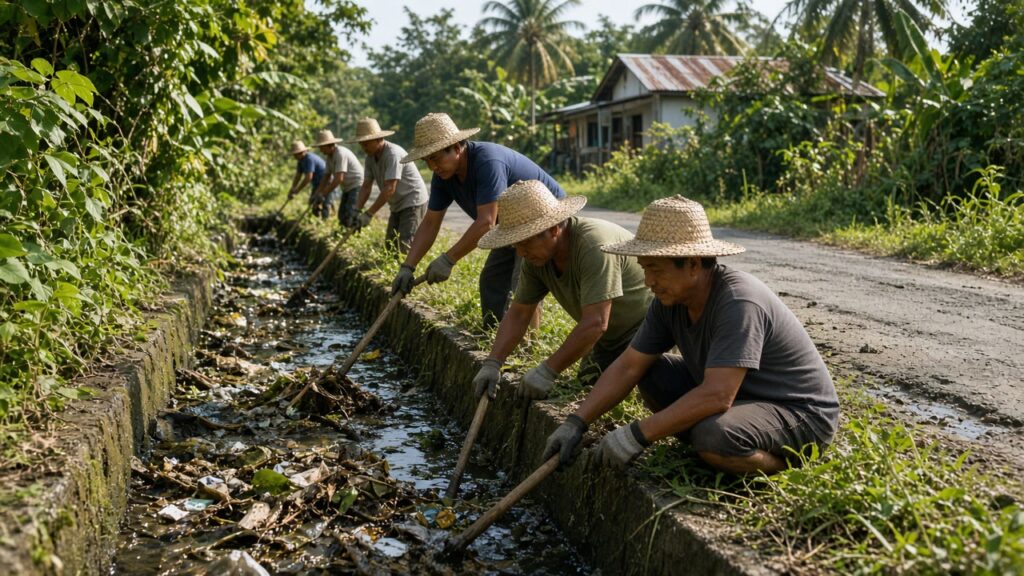
The work is usually simple, physical and done close to home. Common examples include:
- Cleaning roads, public markets and other public facilities
- Clearing debris after a typhoon or flood
- De-clogging canals and drainage
- Minor repairs and repainting of schools, health centers and barangay facilities
- Tree planting, seedling preparation and similar agro-forestry work
For instance, the Philippine News Agency reported that TUPAD workers in Daet, Camarines Norte were hired to clean roads and public facilities for 10 days. A summary of DOLE’s program description on PHGuides lists social community projects (like declogging canals and repairing schools), economic community projects (like farm-to-market roads and public markets), and agro-forestry projects as the types of work TUPAD supports.
Who qualifies for TUPAD?
TUPAD is meant for workers who’ve lost income or don’t earn enough. In general, that includes:
- Displaced workers who were laid off or whose workplace closed
- Underemployed workers whose work is irregular or not enough to live on
- Seasonal workers, such as farm workers between planting and harvest
- Informal and self-employed workers, like vendors and drivers, whose livelihood was disrupted, for example by a calamity
Local implementers also set their own rules. The San Andres LGU guide, for example, says elected and appointed officials, barangay health workers, tanods and pensioners are not allowed to join, and that a beneficiary may avail of the program once a year. It also asks applicants aged 60 to 74 for a certificate that they are fit to work.
Because each batch is approved project by project, the exact list of who gets in can differ by barangay. Your barangay or PESO can tell you the rules for the batch in your area.
How much does TUPAD pay?
TUPAD doesn’t have one national rate. Workers are paid based on the prevailing minimum wage in the region where the project is done, for each day actually worked. A DOLE Eastern Visayas announcement in 2020, for example, described wages “equivalent to 100% of the prevailing highest minimum wage” in the region.
That means your pay depends on where you live, and it goes up when your region’s wage board raises the minimum wage. Some current examples from the National Wages and Productivity Commission summary as of October 6, 2026:
- NCR: ₱755 a day for non-agriculture work under Wage Order NCR-28, effective September 26, 2026 (see the NWPC NCR page and Philstar’s report)
- Bicol (Region V): ₱455 a day, with a scheduled increase to ₱480 on December 1, 2026
- MIMAROPA (Region IV-B): ₱455 a day
Here’s simple math, not a promise. If a TUPAD project in NCR pays the ₱755 rate and you work all 10 days, that’s ₱7,550. In a ₱455-a-day region, 10 days comes to ₱4,550. Miss a day and you’re not paid for it. Your actual rate is the one stated in your project’s orientation.
Some special projects run longer. PNA reported that DOLE, the Department of Agriculture and TESDA in Bicol partnered on a livelihood project for 311 TUPAD beneficiaries, with a budget based on ₱455 a day for 90 days, or ₱40,950 per beneficiary, plus agricultural skills training (PNA report). That’s a specific project, not the usual TUPAD setup, so don’t expect 90 days unless your batch says so.
What else comes with TUPAD?
Besides the daily wage, TUPAD workers typically receive:
- Group micro-insurance or accident insurance. In the Daet project, PNA reported the workers were covered by accident insurance for one year.
- Personal protective equipment such as gloves and hats suited to the work.
- An orientation on occupational safety and health. The Daet workers also got a session on financial literacy.
How to apply for TUPAD, step by step
There’s usually no national online application where you sign up and wait. TUPAD runs in batches, and slots are filled through local partners. Here’s the usual path:
- Ask your barangay hall or your city or municipal PESO if a TUPAD batch is open or coming up. Barangays and LGUs often prepare the list of beneficiaries for their project.
- Prepare your documents. The San Andres LGU, for example, asks for a TUPAD Beneficiary Profile Form, a valid ID, and a fit-to-work certificate for applicants aged 60 to 74. Some LGUs also ask for a barangay certificate. Ask your PESO for its exact list.
- Get profiled and validated. The office checks your identity, residency and whether you fit the program.
- Attend the orientation. You’ll learn your work assignment, schedule, daily rate, safety rules and how you’ll be paid.
- Do the work and keep your attendance clean. Pay is based on the days you actually work.
- Claim your pay. Payout is done through the method announced for your batch. San Andres, for example, asks for the TUPAD ID issued by DOLE plus a photocopy of it or another valid ID.
TUPAD is free. Watch out for fixers
You should never pay anyone to be included in TUPAD. The Philippine Information Agency reported that DOLE Region 1 warned the public that TUPAD does not recruit through private individuals, that it’s implemented strictly through DOLE with LGUs and PESOs, and that “DOLE does not authorize any individual to recruit or collect money for TUPAD.”
Red flags to avoid:
- Someone asking for a “processing fee” or a cut of your future wage
- Facebook pages or group chats promising a “guaranteed TUPAD slot”
- Anyone asking for your GCash or Maya OTP, PIN or password
If something feels off, report it to your PESO or the nearest DOLE office. Our guide on how to spot money scams in the Philippines covers more warning signs.
How to make the most of your TUPAD pay
A few thousand pesos can disappear fast. Some ways to stretch it:
- List your must-pays first. Food, rent, kuryente, tubig and school needs come before anything else.
- Pay off the most expensive utang. If you borrowed from a 5-6 lender or an online lending app while jobless, clearing that first saves you the most money.
- Set aside even a small amount. Even ₱200 to ₱500 is a start toward an emergency fund for the next time income stops.
- Use TUPAD as a bridge. While you’re working, ask your PESO about job fairs and referrals, or check free skills training through TESDA courses.
If you were laid off and you’re an SSS member, check whether you also qualify for the SSS unemployment benefit. For students, DOLE’s SPES program is the better fit.
Quick summary
- TUPAD is DOLE’s short-term emergency employment for displaced, underemployed and seasonal workers, usually 10 to 30 days.
- Pay is based on your region’s minimum wage, for the days you actually work. In NCR that’s currently ₱755 a day.
- Workers usually get insurance coverage, protective equipment and a safety orientation.
- Apply through your barangay or PESO when a batch opens, and bring a valid ID and the documents your LGU asks for.
- It’s free. Never pay a fixer or share your OTP.
TUPAD isn’t a long-term solution, but it can give you honest income and breathing room while you look for steadier work. If you know someone who just lost their job or livelihood, share this with them.
This article is general information only and not financial advice. Rates, rules and fees change, so please verify with the provider or the official agency before deciding.