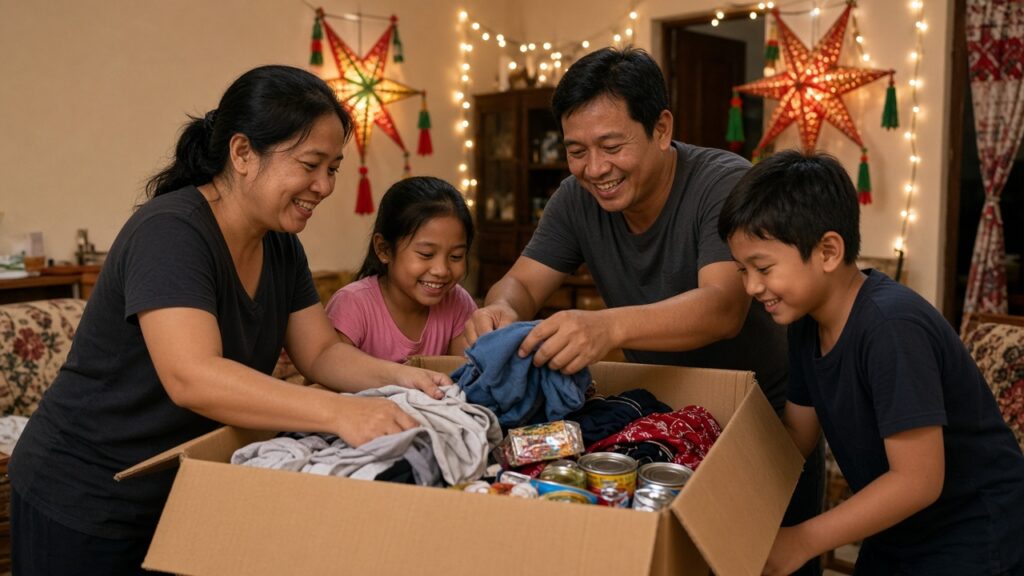
For many OFW families, the balikbayan box is part of Christmas itself. Months of “pasalubong shopping” in Dubai, Riyadh, Hong Kong or California end up in one big carton, and the whole house waits for the delivery truck in December. But a box is also money: what you paid for the items, what you paid the forwarder, and sometimes duties and taxes if you go over the limit.
This guide explains the real duty- and tax-free rules for balikbayan boxes, what happened with the abandoned boxes in 2025 and 2026, how to check if your forwarder is legit, and when sending cash is the smarter move.
Who Can Send a Tax-Free Balikbayan Box
Under Section 800 of the Customs Modernization and Tariff Act (CMTA), Filipino residents, OFWs or other Filipinos residing abroad, or upon their return to the Philippines, may send or bring balikbayan boxes to their families and relatives here free of duties and taxes, according to the Bureau of Customs (BOC). The privilege comes with four conditions:
- Personal and household effects only. The contents must not be in commercial quantities and must not be meant for sale, barter or hire.
- Value limit of ₱150,000. The FCA value (basically the value of the goods at the point of shipping) must not exceed ₱150,000.
- Up to three times a calendar year. You can use the privilege only three times from January to December.
- Excess is taxable. Any amount above the allowed value is subject to the applicable duties and taxes.
In plain terms: clothes, toiletries, chocolates, canned goods, shoes and a few gadgets for the family are fine. Ten units of the same phone model or a box of identical bags “for your online shop” can be treated as commercial, and that is where problems start.
Why 2026 Is Different: The Abandoned Box Problem
Most forwarders deliver boxes without drama. But the last two years showed how badly things can go when one company in the chain fails.
On May 29, 2026, the BOC filed criminal complaints against Makati Express Cargo, Inc. (MECI) and several of its officers. BOC records showed 117 forty-footer containers holding about 36,826 balikbayan boxes left unclaimed at the Manila International Container Port, the Port of Cebu and the Port of Davao from 2024 to 2025. The BOC had revoked MECI’s registration on January 22, 2026, and alleged that the company misrepresented its registration records, did not truthfully disclose its foreign consolidators, and kept accepting shipments even though some of its listed business and warehouse addresses were no longer operating (BOC).
A month later, the BOC filed another batch of complaints against five cargo forwarding firms involving 3,176 abandoned boxes, according to the Commission on Filipinos Overseas (CFO) (The Chronicle / PNA). In October 2026, a BOC official also said inspections found 29 abandoned containers with about 10,000 boxes. He warned that the overseas partners of Philippine companies that had already been charged and blacklisted may still be accepting boxes from OFWs (PhilNews).
That last point is the scary part. The cargo office near you abroad may look normal, accept your payment and give you a receipt, while its Philippine partner is already out of business. Your box can then sit at the port for months.
How the Chain Works (and Where It Breaks)
A typical sea-cargo balikbayan box passes through several hands:
- The consolidator abroad picks up or receives your box, collects your payment, and fills a container with boxes from many senders.
- The shipping line carries the container to a Philippine port.
- The deconsolidator in the Philippines (the local partner) handles customs, pays port charges, unpacks the container, and arranges delivery to each address.
You usually pay only the first company. If it does not pass enough money to its Philippine partner, or if the partner shuts down, the boxes get stuck. This is why the BOC is proposing tighter rules. Under a revised draft order discussed at a public consultation on November 13, 2026, deconsolidators would put ₱2 million in an escrow account, plus ₱500,000 for each consolidator in each country of operation, as a guarantee for duties, taxes and charges (PortCalls Asia). This is still a draft, not a final rule, so do not count on it protecting this year’s Christmas shipment.
Before You Pay: A 6-Step Forwarder Check
The CFO has urged Filipinos abroad to verify cargo forwarders before sending, especially as Christmas approaches (The Chronicle / PNA). Here is a practical checklist based on that advice and the BOC’s published list:
- Check the BOC list. The BOC publishes a list of accredited cargo forwarders for consolidated balikbayan box shipments, arranged per port. Ask your forwarder who its Philippine partner is, then look for that partner’s name on the list for the port your box will go through.
- Verify both ends. The CFO specifically advises checking the identity and accreditation of both the foreign forwarder and its Philippine counterpart. A legit forwarder can name its partner without hesitating.
- Be wary of very low rates. Unusually cheap rates or unexplained extra charges are red flags, according to the CFO. A rate far below what established forwarders charge in your city should make you ask why.
- Keep every document. Keep your official receipt, tracking number and a copy of your packing list. If something goes wrong, these are your proof of what you sent and what you paid.
- Pay through official channels. Pay to the company’s official account or office, not a personal account of an “agent” you met on Facebook. See our guide on how to spot money scams.
- Track it regularly. The CFO advises monitoring your shipment status. If tracking stops updating for weeks, contact the forwarder right away, and keep screenshots.
Packing Tips That Protect Your Money
- Write an honest packing list. List items and their value truthfully. It helps you stay under the ₱150,000 limit and shows the contents are personal, not commercial.
- Do not send cash or valuables inside the box. Forwarders commonly prohibit cash, jewelry and other high-risk items, and you have little protection if the box is lost. Send money through a regulated remittance channel instead.
- Read the forwarder’s prohibited items list. Each forwarder publishes its own list. A banned item can delay the whole box.
- Avoid identical items in bulk. Several units of the same product can look like goods for resale.
- Ask about insurance. Ask what the forwarder pays if a box is lost or damaged, and get it in writing. Going home yourself? Check the travel tax rules too.
Box or Cash? Do the Math First
A balikbayan box is a great gift, but it is not always the cheapest way to share your sahod. Before packing, ask yourself:
- Is it cheaper abroad? Many groceries, toiletries and canned goods cost about the same in a Philippine supermarket. After shipping fees, you may not save anything.
- Will it arrive in time? Sea cargo can take weeks, and the holiday rush adds delays. A box that arrives in January is still welcome, but it will not be on the Noche Buena table.
- Does your family need cash more? Tuition, bills or a small emergency fund may matter more than chocolates. Cash also lets them buy exactly what they need, when they need it.
A balanced approach many families like: send a smaller box with items that are truly cheaper or not available here, plus sentimental gifts, and send the rest as cash. Compare fees and exchange rates using our guide to sending remittances, and plan the family’s holiday spending with our Christmas budget guide.
If Your Box Is Delayed or Missing
- Contact the forwarder first with your receipt and tracking number, and ask for the container number and the name of the Philippine partner.
- Reach out to the BOC through its official channels on customs.gov.ph. The BOC said affected OFWs and recipients personally sought its help in the MECI case, and that it continues to deliver abandoned boxes to their rightful recipients (BOC).
- Watch out for “fixers.” Be careful with anyone online who asks for a fee to “release” your box. If you were scammed, see how to report an online scam.
The Bottom Line
The tax-free balikbayan box privilege is generous: personal and household items up to ₱150,000 in value, up to three times a year. The bigger risk in 2026 is not customs. It is choosing the wrong forwarder. Spend ten minutes checking the BOC list and your forwarder’s Philippine partner, keep your receipts, and think twice before chasing the cheapest rate. Your family’s Christmas, and your hard-earned money, are worth that extra step.
This article is general information only and not financial advice. Rates, rules and fees change, so please verify with the provider or the official agency before deciding.