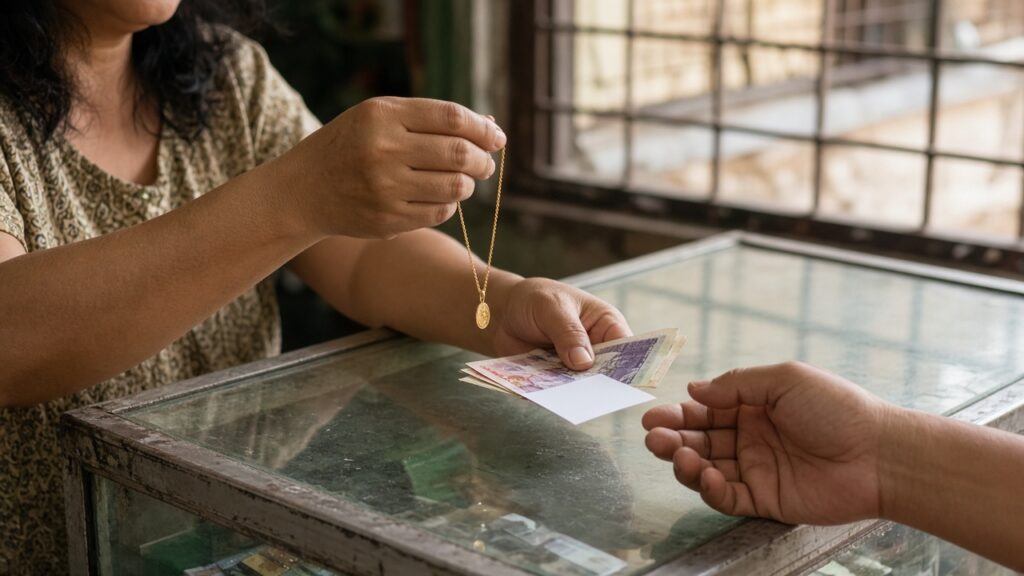
Kulang ang pang-tuition, may biglaang bayarin sa ospital, o malapit na ang Pasko at wala pang pang-Noche Buena. For many Filipinos, the quickest answer is the neighborhood sanglaan. You hand over a ring, a necklace or a gadget, get cash in minutes, and come back later to redeem it.
Pawning can be a sensible short-term tool because there is no credit check and no co-maker. But it can also cost you your heirloom jewelry if you do not understand the rules. This guide explains how pawnshop loans work in the Philippines, what the law protects, and how to avoid losing your item.
Who Regulates Pawnshops?
Pawnshops are governed by Presidential Decree No. 114, the Pawnshop Regulation Act (Official Gazette). The Bangko Sentral ng Pilipinas (BSP) supervises them and sets detailed rules in its Manual of Regulations for Non-Bank Financial Institutions for pawnshops (BSP MORNBFI-P). Some chains post these rules for customers, such as Cebuana Lhuillier’s BSP Circular page.
Bottom line: deal only with a pawnshop that is registered with the BSP. A “sanglaan” operating from someone’s house, or a person on Facebook offering “sangla ATM” or “sangla cellphone” deals, is not protected by these rules.
How a Pawnshop Loan Works
- Appraisal. You bring the item. The appraiser checks it (for gold, usually the karat and weight) and gives an appraised value.
- Loan amount. Under Section 9 of PD 114, the loan cannot be less than 30% of the appraised value, unless you state in writing that you want a smaller amount. BSP rules also say pawnshops must not under-appraise to get around this.
- ID check. First-time customers must present an original valid photo ID issued by an official authority, such as a passport, driver’s license, PhilID, UMID, PRC ID or Postal ID, under BSP rules.
- Pawn ticket. You get a pawn ticket showing the loan date, maturity date, amount, interest and the item description. Section 12 of PD 114 says the pawnshop cannot charge you for the ticket.
- Redemption. You pay the principal plus interest, surrender the ticket, and get your item back.
Interest and Charges: What the Rules Say
Many borrowers assume there is a legal cap on pawnshop interest. There is not. According to the BSP rules posted by Cebuana Lhuillier, the interest rate, including surcharges, on a pawnshop loan is not subject to any ceiling. However, following the Supreme Court decision in Medel v. Court of Appeals (G.R. No. 131622, 1998), interest must not be iniquitous or unconscionable. The same rules add:
- A pawnshop cannot collect interest in advance for more than one year.
- If there is no written agreement on the rate, the interest is 12% per year.
- Besides interest, the pawnshop may charge a service charge of up to ₱5, but never more than 1% of the principal.
- No other charges may be collected, including insurance premiums for keeping your item safe.
Because rates differ from shop to shop, always ask for the monthly interest rate and look at the pawn ticket before you sign. Compare at least two pawnshops, especially for gold, where appraisals can differ.
Watch the “fraction of a month” rule
The BSP’s standard pawn ticket stipulations allow a pawnshop to treat a fraction of a month as one whole month when computing interest on loans paid after the maturity date (BSP Appendix P-4-b). The standard stipulations also allow liquidated damages of 2% per month of the principal if the loan is not paid at maturity, if your ticket includes that clause.
Example for illustration only: Say you borrow ₱10,000 and your pawn ticket states 3% per month (a hypothetical rate, not a market quote). One month of interest is ₱300. If you redeem one month and three days after maturity, those extra three days may be counted as a full second month. Redeeming just a few days earlier, or renewing on time, can save you real pesos.
Under Section 13 of PD 114, interest after maturity is computed on the principal plus the interest already earned at maturity. In plain terms, unpaid interest can start earning interest too. This is why “mamaya na lang” gets expensive fast.
Your 90-Day Grace Period
This is the most important protection to remember. If you cannot pay on the maturity date, PD 114 Section 13 gives you 90 days from the maturity date to redeem your item by paying the principal plus interest. The BSP rules repeat this right.
The pawnshop can only sell your item after those 90 days pass, and only if it follows these steps (PD 114, Sections 14 and 15):
- It must notify you in writing on or before the end of the 90-day period, stating the date, hour and place of the sale.
- The item must be sold at a public auction handled by a licensed auctioneer, in the city or municipality where the pawnshop operates.
- Notice of the auction must be published in at least two daily newspapers during the week before the sale (or posted in public places in remote areas without local newspapers).
Keep your address and number updated with the pawnshop so the notice reaches you.
Renewing Instead of Redeeming
If you cannot pay the full principal yet, ask about renewal. A loan can be renewed under new terms agreed with the pawnshop, but under BSP rules, no renewal or extension is valid unless a new pawn ticket is issued showing the new term. Usually you pay the interest due to renew. Always get the new ticket and keep it with the old one.
Lost Your Pawn Ticket?
Do not panic. BSP rules say a pawnshop must not release a pawn without the ticket, but if it is lost, you can execute an affidavit of loss. The pawnshop will verify your identity so the item is released only to the owner. Report the loss right away, and take a photo of every new pawn ticket you receive as a backup.
When you redeem, the pawnshop must return the item in the same condition you pawned it. Check your jewelry or gadget before you leave the counter.
Practical Tips Before You Pawn
- Borrow only what you need. A bigger loan means bigger interest. You can ask for less than the maximum.
- Put the maturity date in your phone calendar, plus a reminder a week before the 90-day grace period ends.
- Do not pawn items you cannot afford to lose, like a wedding ring or an heirloom, unless you have a clear plan to redeem.
- Keep the ticket safe and private. Anyone holding it plus a valid authorization may try to claim your item.
- Never hand over your ATM card or PIN as “sangla.” That is not a pawnshop loan under PD 114, and it exposes your account to fraud.
Compare With Other Short-Term Options
A pawnshop loan is fast, but it is not always the cheapest. If you are a member of SSS or Pag-IBIG, check whether you qualify for an SSS Salary Loan, an SSS Calamity Loan or a Pag-IBIG Multi-Purpose Loan. These take longer to process but are often cheaper over several months. Before any loan, learn how to compute your real cost with our guide on add-on vs diminishing interest, and stay away from unregistered apps using our checklist on legit online lending apps.
Over the long term, the best protection from repeated sangla is an emergency fund, even a small one built ₱100 at a time.
Where to Complain
If a pawnshop sold your item before the 90-day grace period ended, charged fees not allowed by the rules, or refused to release your item after full payment, first raise it in writing with the branch and the company’s customer service. If it is not resolved, you can elevate your complaint to the BSP. See our step-by-step guide on how to file a complaint with the BSP, and keep copies of your pawn tickets, receipts and any notices.
Key Takeaways
- Pawnshops are governed by PD 114 and supervised by the BSP. Use only registered ones.
- The loan must be at least 30% of the appraised value unless you ask in writing for less, and the pawn ticket is free.
- There is no legal ceiling on pawnshop interest, but it must not be unconscionable. Only a service charge of up to ₱5 (max 1% of principal) is allowed on top of interest.
- You have 90 days after maturity to redeem. After that, the item can only be sold at a properly noticed public auction.
- Renewals require a new pawn ticket. Lost tickets can be replaced through an affidavit of loss.
Used wisely, a sangla can bridge a short cash gap without dragging you into long-term debt. Know your dates, know your rights, and redeem on time.
This article is general information only and not financial advice. Rates, rules and fees change, so please verify with the provider or the official agency before deciding.