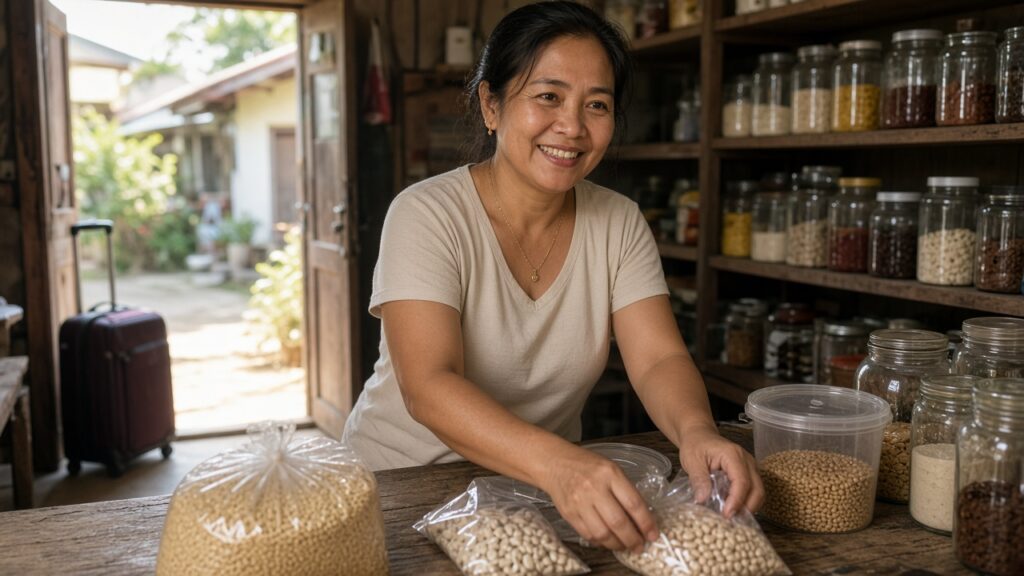
Coming home earlier than planned is one of the hardest things an OFW can go through. Maybe the employer closed shop, the contract was cut short, there was trouble in the host country, or you were treated badly and had to leave. Suddenly the monthly padala stops, but the bills at home do not.
If you are an OWWA member in that situation, there is a government program built for you: the Balik-Pinas! Balik-Hanapbuhay! (BPBH) Program of the Overseas Workers Welfare Administration. It gives qualified returning OFWs cash assistance and training to start or grow a small livelihood. This guide explains who qualifies, how much you can get, what to prepare, and how to use the money wisely.
What is the OWWA Balik-Pinas Balik-Hanapbuhay Program?
According to OWWA’s official BPBH page, the program is a package of livelihood support meant to give immediate relief to returning member-OFWs. It includes:
- Cash assistance of up to ₱20,000 as start-up or additional capital for a livelihood project;
- Entrepreneurship development training; and
- Other support services, such as marketing linkages and job referrals, to help you start and manage a self-employment activity.
It is a grant, not a loan, so you do not pay it back. But it is meant for a real livelihood, not for daily expenses, so OWWA asks for a simple business plan before releasing it.
How much can you get?
The amount depends on your OWWA membership status. As reported by the Philippine Information Agency (May 2026), the assistance has three tiers:
| OWWA membership status | Livelihood assistance |
|---|---|
| Active member | ₱20,000 |
| Inactive member with more than one contribution | ₱10,000 |
| Inactive member with only one recorded contribution | ₱5,000 |
Let’s be realistic: ₱5,000 to ₱20,000 will not replace an overseas salary. Think of it as puhunan to start something small and manageable, like a sari-sari store, a food stall, a laundry service, or tools for a skill you already have. It is a starting push, not a guaranteed income.
Who qualifies?
BPBH is for returning OWWA member-OFWs who were displaced or distressed, not for every OFW who comes home after finishing a contract. Based on the PIA report and OWWA’s description, you are likely a candidate if:
- You are (or were) an OWWA member, whether active or inactive;
- You came home because you were displaced or distressed, for example due to war or political conflict, employer closure, illegal dismissal, maltreatment, or other employment-related problems abroad; and
- You are now back in the Philippines and want to start or expand a legitimate livelihood.
Important 2026 update: Under new implementing guidelines issued on April 20, 2026, applicants now need a certification or referral from a Migrant Workers Office abroad confirming that they were distressed, displaced, or had employment-related issues, according to the PIA report. OWWA Region 7 described this as the key requirement to qualify. The same guidelines removed the old site inspection of the proposed project.
If you are still abroad and having problems with your employer, ask the Migrant Workers Office at your post about this certification before you fly home. It is much easier to get while you are still there.
The assistance is generally treated as a one-time benefit, and OFWs who simply finished their contracts and came home voluntarily usually do not qualify, as legal commentary sites such as Respicio & Co. explain. Always confirm your own case with your OWWA Regional Welfare Office.
Requirements to prepare
Exact requirements can differ slightly per regional office, so call or message your OWWA regional office first. Commonly requested documents include:
- Duly accomplished BPBH application form (available at OWWA offices);
- Your passport, including the pages showing your last departure and arrival stamps;
- Proof of OWWA membership (for example, an OWWA verification or proof of contribution);
- Certification or referral from the Migrant Workers Office abroad showing you were distressed or displaced (key requirement under the April 2026 guidelines);
- A simple business plan for your proposed livelihood;
- Certificate of Entrepreneurship Development Training (EDT);
- Barangay clearance or certification and a recent 2×2 ID photo;
- Valid government IDs.
Bring originals and photocopies. If someone will file for you, ask OWWA what authorization (such as a special power of attorney) they need.
Step-by-step: how to apply
- Get your Migrant Workers Office certification. If you are already home, ask your OWWA regional office how to request it from the post where you worked.
- Visit your OWWA Regional Welfare Office. In Region 7, PIA reported that applications are accepted on a walk-in basis with no appointment needed. Other regions may have their own schedule, so check your regional office’s official Facebook page or hotline first.
- Attend the one-day Entrepreneurship Development Training (EDT). Per PIA, this is conducted by the DTI through its Negosyo Centers. If you already run a business, you may be exempted by showing proof of operations.
- Prepare and submit your business plan with your other documents.
- Wait for evaluation and release. OWWA reviews your application and, if approved, releases the assistance for your livelihood project.
How to write a simple business plan
You do not need a fancy document. A clear, honest one-to-two page plan is enough. Answer these questions:
- What will you sell or offer? Example: ulam and rice meals for workers near a construction site.
- Who will buy? Your neighbors, students, tricycle drivers, nearby offices?
- Where will you operate? Your home, a rented stall, online?
- What will the money buy? List each item and price: a two-burner stove, pots, food containers, first week’s ingredients.
- How will you price it? Cost of ingredients and packaging plus a fair margin. Our guide on pricing homemade food can help.
Choose a livelihood that matches skills you already have. If you were a cook, driver, caregiver or technician abroad, build on that. A business you understand is safer than copying whatever is trending.
Livelihood ideas that fit a ₱5,000 to ₱20,000 budget
- Sari-sari store add-on or small store — see our sari-sari store guide.
- Food business like a lutong-bahay stall or kakanin — see how to start a carinderia.
- Laundry, alterations, or repair services using equipment you buy with the grant.
- Online selling of products you know well; remember to register your online business properly.
Start small, track every peso, and keep business money separate from household money. Even a notebook works.
Other programs you can combine with BPBH
If ₱20,000 is not enough capital, you can look at other legitimate government options, but borrow only what your business can realistically repay:
- DOLE Kabuhayan Program for livelihood starter kits;
- SB Corp P3 Loan for low-interest small business capital;
- Small Business Corporation (SB Corp) financing such as the OFW Negosyo Fund, which the DTI listed in September 2026 among its collateral-free financing facilities;
- BMBE registration for possible tax benefits once your business is running.
Beware of fixers and scams
Because BPBH involves cash, scammers sometimes pretend to be “OWWA agents” who can speed up approval for a fee or who ask for your account login or OTP. Apply only at official OWWA offices or through channels listed on owwa.gov.ph and OWWA’s verified social media pages. Do not pay anyone to “process” your grant. Read our guide on how to spot money scams to protect yourself.
Plan your next steps as a returning OFW
While your livelihood is starting, focus on stability first. Keep a small cushion for food, rent and bills, and try to rebuild an emergency fund as soon as income comes in. If family members are still abroad, our guide on sending money home without losing pesos can help them keep more of each padala.
Quick summary
- BPBH gives qualified returning OWWA member-OFWs cash assistance for a livelihood, plus training and support.
- Amounts: ₱20,000 for active members, ₱10,000 for inactive members with more than one contribution, and ₱5,000 for inactive members with one contribution.
- It is for displaced or distressed OFWs; since April 2026, a Migrant Workers Office certification or referral is the key requirement.
- You need to attend a one-day DTI Entrepreneurship Development Training (unless exempted) and submit a business plan.
- Apply only through official OWWA offices; never pay fixers.
Coming home early is not the end of the road. With a clear plan, a small business you understand, and help from programs like BPBH, you can start earning again here at home, one step at a time.
This article is general information only and not financial advice. Rates, rules and fees change, so please verify with the provider or the official agency before deciding.