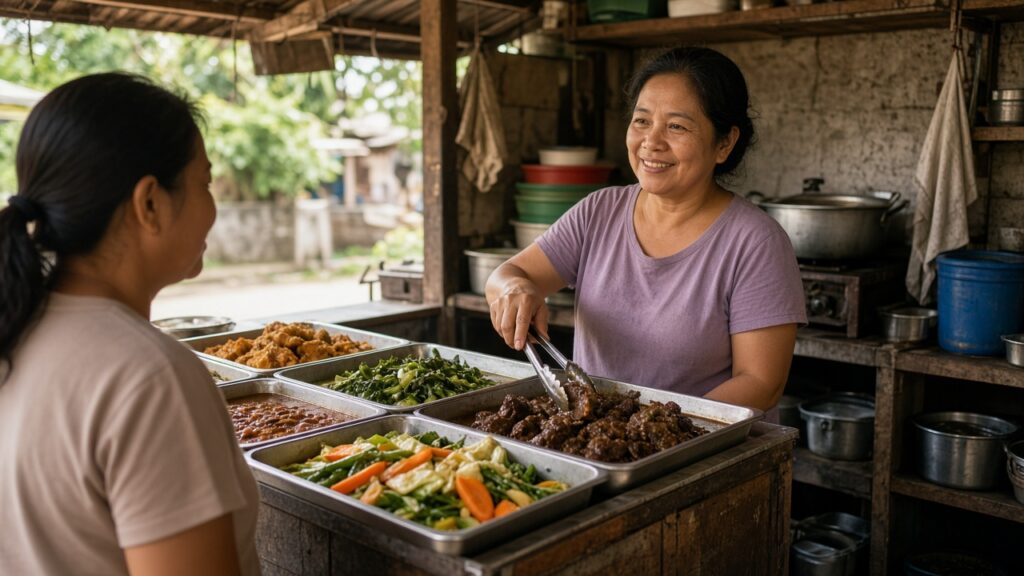
A carinderia is one of the most familiar small businesses in the Philippines. Office workers, tricycle drivers, students and neighbors all need affordable ulam, and many Filipino families have turned a pot of adobo and a few tables into steady extra income. But a carinderia is also hard work with thin margins, and plenty of first-timers close within months because they never did the math. This guide covers how to plan, register and run a small carinderia realistically.
Honest expectation first: there is no guaranteed profit in food business. Sales depend on your location, your food, your prices and your daily discipline. Start small, track every peso and be ready to adjust.
Step 1: Check if there is real demand
Before you buy anything, spend a few days watching your target spot. Count how many people pass by during breakfast, lunch and merienda. Look at nearby competitors: what do they sell, at what price, and what do customers complain about? Good locations are usually near schools, offices, factories, terminals, markets or construction sites.
Ask potential customers directly. A simple question such as “What ulam do you usually buy for lunch, and how much do you spend?” will tell you more than any guess.
Step 2: Build a simple startup budget
Do not borrow big for a first carinderia. List what you truly need and price it at your local market and hardware store. Typical categories include:
- Equipment: stove and LPG tank, large pots and pans, food trays or serving pans, ladles, plates, spoons, a refrigerator or cooler if needed.
- Space: rent, or a converted garage or front area of your home, plus tables and chairs.
- Permits and health requirements: see Step 3.
- Opening stock: rice, oil, meat, vegetables and seasonings for the first week.
- Cash buffer: enough to cover slow days and restocking. Many small shops run out of cash before they build a customer base.
Use your own savings or a sinking fund first. If you must borrow, avoid online lending apps with high charges and unclear terms. Our guide on how to check if a lending app is legit can help, and a cooperative or a registered lender is usually safer than informal “5-6” lending.
Step 3: Register and get the right permits
Requirements differ by city or municipality, so always confirm with your local government. In general, food businesses need the following:
- Business name registration: sole proprietors register a business name with the Department of Trade and Industry (DTI) through its Business Name Registration System.
- Barangay clearance: from the barangay where your carinderia will operate.
- Mayor’s or business permit: from your city or municipal hall, usually renewed every year.
- Sanitary permit and health certificates: food handlers typically need health certificates from the local health office, and the establishment is inspected for sanitation.
- BIR registration: register with the Bureau of Internal Revenue so you can issue receipts and pay the correct taxes. Check the BIR website or your Revenue District Office for current steps.
The government’s business.gov.ph portal lists steps for starting a business. Very small businesses may also qualify for tax benefits; read our article on BMBE registration to see if you might.
Also remember to register yourself for SSS, PhilHealth and Pag-IBIG as a self-employed person if you do not have an employer paying contributions. Your safety net matters when your income is your own.
Step 4: Price your food using real costs
The most common mistake is pricing by feel. Use this simple formula for each dish:
Cost per serving = total ingredient cost of the batch ÷ number of servings
Then add a share of gas, labor (yes, pay yourself), packaging and a little allowance for leftovers and spoilage. Compare your price with nearby carinderias, then decide where you fit.
Example only, not real market prices: if a pot of a dish costs ₱600 in ingredients and yields 20 servings, the ingredients cost ₱30 per serving. After adding gas, labor and waste, you would price above that so the business actually earns something. Always use your own current market prices.
Many carinderias keep a few reliable best sellers and rotate others, so waste stays low. Rice, a soup and one or two budget-friendly dishes often move fastest.
Step 5: Control waste and cash
- Cook in batches: start with smaller pots in the morning and add more if you sell out, instead of cooking too much.
- Track sales daily: write down sales, purchases and leftovers every day in a notebook or a simple spreadsheet.
- Separate money: keep business cash apart from household cash. A separate GCash, Maya or bank savings account for the business makes it easier to see what is really earned. Our cash envelope budgeting guide works well here too.
- Use suki credit carefully: utang from customers can drain working capital. If you allow it, set a limit and a written record.
- Accept digital payments: a QR code through GCash or Maya can attract customers who carry little cash, but check each provider’s current merchant fees first.
Step 6: Keep quality and safety high
Repeat customers are your real income. Keep food hot and covered, wash your hands and utensils properly, store raw and cooked food separately and keep the area clean. Consistent taste and fair portions will earn more trust than a big signboard.
Step 7: Know when and how to grow
Give the business at least a few months of tracked results before expanding. Signs you may be ready: you regularly sell out, your records show a profit after paying yourself, and you have a cash buffer. Growth options include adding breakfast items, offering catering for small events, selling packed lunches to nearby offices or taking orders through Facebook. Add one change at a time and measure the result.
Common mistakes to avoid
- Spending most of your capital on equipment and having nothing left for ingredients.
- Not paying yourself, which hides the true cost of the business.
- Mixing business cash and personal cash.
- Skipping permits, then facing closure or penalties later.
- Believing “franchise” or “investment” offers that promise fixed, fast returns. Check the registration of any company with the SEC and the DTI first.
Bottom line
A carinderia can be a solid source of income for a hardworking family, but it rewards planning, clean food and careful records, not luck. Start small, register properly, price using your real costs and watch your cash every day.
This article is general information only and not financial advice. Rates, rules and fees change, so please verify with the provider or the official agency before deciding.