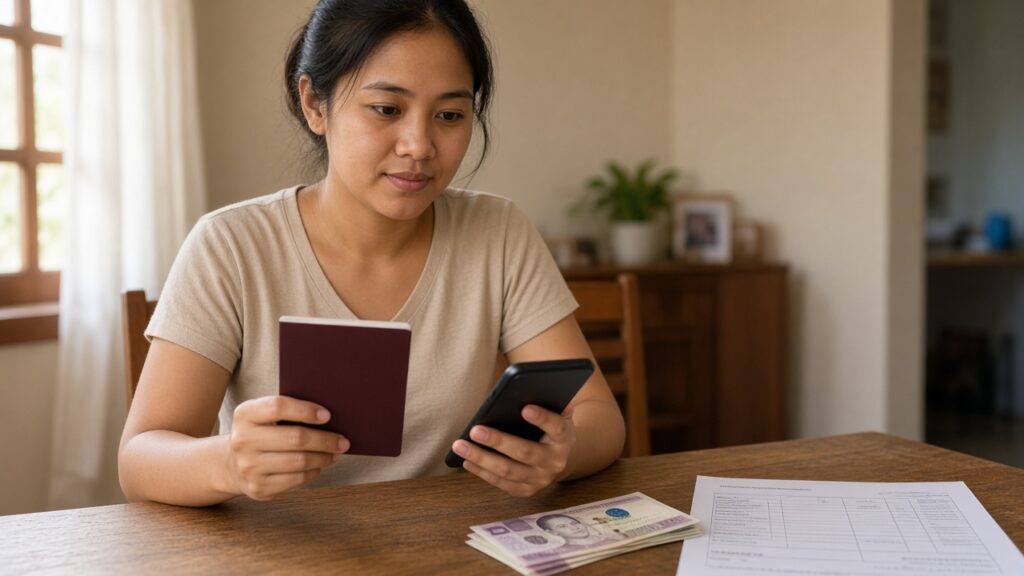
Planning a trip abroad, an overseas job, or just want a valid ID that works almost everywhere? A Philippine passport is one of the most useful documents you can have. The good news: the official DFA passport fee is fixed and fairly affordable. The bad news: many Filipinos still end up paying more than they need to, through fixers, rush fees they did not need, rebooked flights, or a second application because of a typo.
This guide explains the official fees, what you actually need to pay for, and simple ways to keep your passport costs low, based on the DFA Office of Consular Affairs’ own Passport FAQs.
How much is the DFA passport fee?
For passports applied for inside the Philippines, the DFA lists the same fees for new applications and renewals:
- Regular processing: ₱950
- Expedited (rush) processing: ₱1,200
- Penalty for a lost or mutilated ePassport: ₱350 (on top of the processing fee)
Source: DFA Passport FAQs. When you pay online through the appointment system, a separate convenience or service charge is added, and courier delivery is an optional extra. The exact amounts appear during booking, so check the total on the payment screen before you confirm.
The appointment itself is free
This is the single most important money-saving fact: passport appointments are free of charge. The DFA says regular applicants must book online at passport.gov.ph, that appointments cannot be made through Facebook or other social media, and that appointments not made through passport.gov.ph are not legitimate.
So if someone on Facebook offers you a “guaranteed slot” for ₱500 or ₱1,500, you are not paying for a faster passport. You are paying a fixer. According to the DFA, getting an appointment from fixers or “passport appointment assistance services” is a violation of the law, and violators can be prosecuted and barred from applying for passports. That is a very expensive “shortcut.”
How long does processing take?
Based on the DFA FAQs, release times after your appointment are:
- Regular, Metro Manila: about 10 working days
- Regular, outside Metro Manila: about 12 working days
- Expedited, Metro Manila: about 5 working days
- Expedited, outside Metro Manila: about 7 working days
The DFA also notes that passports applied for within the Philippines may take 10 to 15 working days to be released, and these timeframes do not include courier delivery. Release dates are tentative.
Is the ₱1,200 rush fee worth it?
The difference between regular and expedited is ₱250. That is not huge, but here is something many people do not know: the DFA says the release dates are tentative, and if your expedited passport is not ready on the scheduled date, the express processing payment is not refundable.
In other words, ₱1,200 buys you a faster target, not a guarantee. If you have no trip booked yet, regular processing at ₱950 is usually enough. Save the ₱250 for your travel fund.
Don’t book flights before you have the passport
The DFA strongly advises applicants not to buy outbound travel tickets until the passport is actually in their hands. It says it will not be responsible for rebooking charges, lost income, or other losses from travel plans made while the passport has not been released. Booked flights also do not guarantee approval for early release requests.
A rebooking fee or a forfeited seat sale can easily cost more than the passport itself. Get the passport first, then hunt for promo fares.
Renew early, but not too early
You can renew even if your passport is still valid for more than a year. However, for travel, the DFA reminds applicants that a passport must be valid for at least six months from the date of departure. It suggests renewing within one year of the expiration date.
Under Republic Act No. 11983, the New Philippine Passport Act, as cited by the DFA, a regular passport issued to Filipinos 18 and older is valid for 10 years, while one issued to those under 18 is valid for 5 years. If you are an adult, ₱950 every ten years works out to less than ₱100 a year.
Avoid paying twice: check every detail
One of the most painful extra costs is a passport with a wrong name, sex or birth date. The DFA says to check your new passport carefully before leaving the consular office. If the details are wrong, you may need to reapply and pay the regular ₱950 fee again.
To avoid this:
- Type your details carefully when filling out the online form, and compare them with your PSA birth certificate.
- If your PSA birth certificate has errors, have it corrected first. The DFA says you can apply once the incorrect details have been corrected.
- Married women who want to use their married name should bring a PSA marriage certificate when renewing.
- Review the encoded information on the screen during your appointment before you approve it.
Courtesy lane: who can walk in
Some applicants do not need an online appointment and can go to the Courtesy or Special Lane at DFA Aseana and other consular offices, if they bring proof of eligibility. Based on the DFA FAQs, these include:
- Senior citizens (with a valid government ID showing proof of age, PSA birth certificate, or passport)
- Persons with disabilities
- Minors aged 7 and below
- Pregnant applicants
- Solo parents
- Bona fide OFWs with proof of OFW status
- Exceptional and emergency cases, such as medical emergencies or a death in the family
A senior citizen may bring one adult companion who is a relative within the fourth civil degree or a travel companion, with supporting documents. Note that consular offices can set their own daily limit for walk-ins, so going early helps. The courtesy lane does not waive the processing fee; you still pay the regular or expedited fee.
Paying the fee safely
The DFA’s ePayment process is simple: book your slot at passport.gov.ph, pay the processing fee at an authorized payment center or online option shown in the system, then wait for a confirmation email with your appointment packet, which you print and bring. If you do not receive the confirmation email within 24 hours after paying, the DFA says to call (02) 8234-3488.
A few safety reminders:
- Only pay through options shown inside passport.gov.ph. Never send money to a personal GCash or Maya number for a “slot.”
- Keep your receipt or reference number until your passport is released.
- Be careful with lookalike websites. Type the address yourself instead of clicking links from random messages.
Missed your appointment? Plan carefully
Rescheduling is limited. According to the DFA, applicants who cannot appear may be allowed a reschedule only for exceptional and emergency reasons, and the new date must be within six months of the original appointment. Requests are reviewed and need proof. Choose a date you can really make, and file leave from work early if needed, so your payment does not go to waste.
Don’t forget to claim it
If you skip courier delivery and pick up your passport yourself, do not wait too long. The DFA says it will cancel a passport that is not claimed within one year from its release date. That means paying for a whole new application.
Sample budget for a first passport
Here is a simple way to plan, using the official DFA fee and leaving room for costs that vary:
- Passport processing (regular): ₱950
- Online convenience charge: amount shown at checkout
- PSA birth certificate copy (if you don’t have a recent one): check the current PSA fee
- Courier delivery (optional): amount shown during booking
- Transport and food on appointment day: your own estimate
Even with extras, you can usually keep a first passport close to the official fee if you book directly, choose regular processing, avoid fixers, and get your documents right the first time.
Quick checklist
- Book only at passport.gov.ph. Appointments are free.
- Choose regular (₱950) unless you truly need rush (₱1,200, non-refundable if delayed).
- Double-check your details against your PSA documents.
- Don’t buy plane tickets until you hold the passport.
- Renew within a year of expiry, and keep at least six months’ validity for travel.
- Claim your passport within one year of release.
For the latest rules and requirements, always check the DFA Office of Consular Affairs and passport.gov.ph. You may also like our guides on the Philippine travel tax and how to verify an overseas job with DMW.
This article is general information only and not financial advice. Rates, rules and fees change, so please verify with the provider or the official agency before deciding.