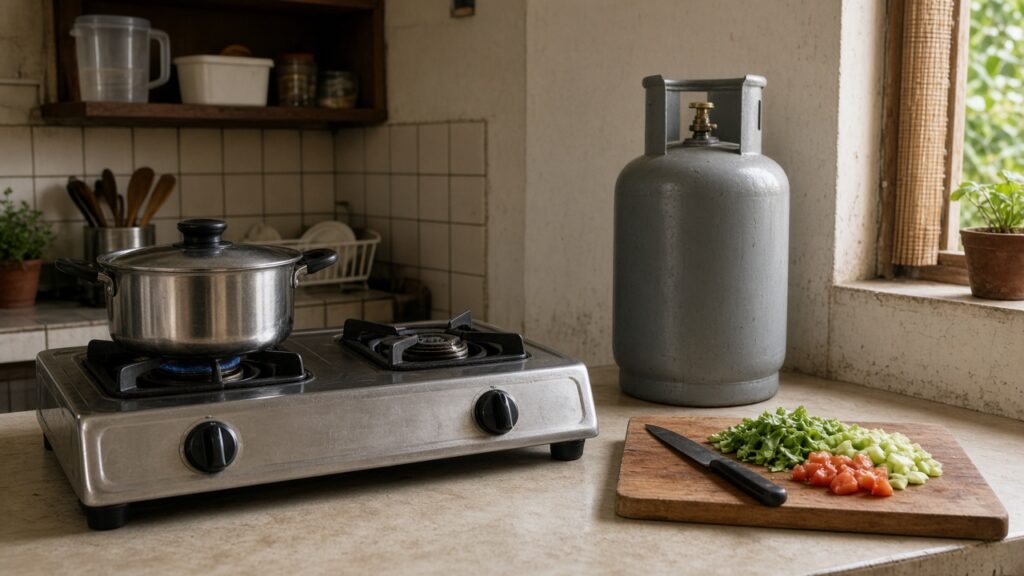
For many Filipino households, the LPG tank is one of those expenses you only notice when it runs out in the middle of cooking rice. A refill is a big one-time payment, and when prices go up, it hurts the monthly budget. The good news is that a few simple kitchen habits can make each tank last longer, and buying from the right seller protects both your money and your family’s safety. This guide covers practical ways to save on cooking gas in the Philippines.
First, know how long your tank really lasts
You cannot cut a cost you do not measure. The next time you get a refill, write the date on a piece of masking tape and stick it on the wall near the stove, or note it in your phone. When the tank runs out, note the date again. Now you know how many weeks one tank lasts your household.
Divide the refill price by the number of days it lasted, and you get your daily cooking gas cost. For example, with made-up numbers, if a refill cost ₱1,000 and lasted 40 days, your gas costs ₱25 a day. Once you know your baseline, you can see whether the tips below are actually working. If you want to track all your spending this way, see our guide on how to track your expenses.
Cooking habits that save gas
1. Match the flame to the pot
If the flame climbs up the sides of the pot, the extra heat is going into the air, not your food. Keep the flame under the bottom of the pot. Use the small burner for small pots and the big burner only for big ones.
2. Always use a lid
Water boils faster with the lid on, and soups, sinigang, tinola and nilaga cook with less gas when the heat stays inside. Once it boils, lower the flame. A gentle simmer cooks the food just as well as a hard boil.
3. Prepare everything before you light the stove
Wash, cut and measure your ingredients first. Every minute the stove is on while you are still slicing onions or looking for the patis is wasted gas.
4. Thaw frozen food ahead of time
Move frozen meat or fish from the freezer to the refrigerator the night before. Cooking food straight from frozen takes longer and uses more gas.
5. Use a pressure cooker for tough meats and beans
Dishes like beef kare-kare, pork pata, bulalo and munggo can take a long time to soften in a regular pot. A pressure cooker shortens the cooking time considerably, which means less gas per dish. It is an upfront purchase, so it makes the most sense if you cook these dishes often.
6. Cook in batches
Cooking adobo, giniling or a big pot of ulam good for two days uses less gas than cooking small amounts every meal. Store the extra in the refrigerator and reheat only what you need. This also pairs well with bringing baon to work. Our baon meal prep guide has ideas.
7. Use residual heat
Turn off the stove a minute or two before the food is fully done. The hot pot keeps cooking it. This works well for rice, pasta, boiled eggs and vegetables.
8. Keep your burners clean
A burner clogged with grease and food bits gives a weak, uneven or yellow-orange flame instead of a steady blue one. Clean the burner holes regularly with a brush or a pin once the stove is cool. If the flame stays yellow even after cleaning, have the stove checked.
9. Consider other appliances for some tasks
A rice cooker, electric kettle or air fryer can take some tasks off the gas stove. Whether this saves money depends on your electricity rate and how often you use them, so compare honestly using your actual bills. If you are trying to lower your power bill too, read our tips on lowering your Meralco bill.
Buy smart: protect your money and your safety
A cheap refill is not a good deal if the tank is underfilled or unsafe. The Philippines has a law for this, the LPG Industry Regulation Act (Republic Act No. 11592). Under Section 24, every LPG business must secure a License to Operate (LTO) from the Department of Energy (DOE) and publicly post it at its store. The law also requires dealers and retailers to sell only LPG in cylinders with the authorized seal of the refiller or marketer, and to ensure the correct weight of cylinders delivered to consumers.
Here is what that means for you:
- Buy from a licensed store. Look for the posted DOE License to Operate. The DOE keeps a list of LPG establishments with a valid LTO on its website. The DOE has also reminded consumers to buy from authorized suppliers with physical stores, not from random leaflets.
- Check the seal. According to the DOE’s consumer safety tips, the security seal should be intact and firmly attached to the valve, and the brand on the seal should match the brand on the cylinder.
- Check the weight. An underfilled tank means you paid for gas you did not get. The cylinder’s data plate shows its tare weight, which is the weight of the empty tank. A filled tank should weigh the tare weight plus the net content you paid for. The DOE has said that even delivered tanks should come with a weighing scale so you can check before accepting.
- Avoid suspiciously cheap refills. Illegal backyard refilling is penalized under the law. A price far below nearby licensed stores is a warning sign, not a bargain.
Check prices before you refill
LPG prices in the Philippines usually move every month, following world prices. The DOE publishes price monitoring reports on its official website, and adjustments are commonly reported in the news at the start of each month. If you know a price increase is coming and your tank is nearly empty, it can make sense to refill a few days earlier. Prices also differ between brands and stores in the same area, so ask two or three licensed sellers near you.
Some households keep a spare tank so they never run out at a bad time. This means a larger upfront cost, but it lets you refill when it is convenient and lets you compare prices instead of buying from the nearest seller in a hurry.
Safety tips that also prevent waste
A leak wastes gas and, more importantly, is dangerous. The DOE’s LPG safety tips include these basics:
- Keep the cylinder upright. Never lay it down or turn it upside down.
- Use only LPG-resistant hoses with clamps, and replace hoses that are cracked, stiff or worn.
- Check connections, especially at the regulator and cylinder, for leaks using soapy water. Bubbles mean a leak.
- Never use a match or flame to check for leaks.
- Do not store the cylinder inside an enclosed kitchen cabinet, and keep it away from electrical outlets and other sources of fire.
- Never leave cooking unattended. A pot can boil over and put out the flame while gas keeps flowing.
- Do not repair a cylinder or regulator yourself. Call an authorized person.
Close the regulator valve when you are done cooking for the day, especially if you will be away from home. If you smell gas, do not turn any switches on or off, open doors and windows, close the valve if you can do it safely, and call your LPG dealer or the Bureau of Fire Protection.
A simple household plan
- Write down the date of your next refill and how long it lasts.
- Agree as a household on two or three habits: lids on, right-size burner, prep first.
- Buy only from licensed stores and check the seal and weight every time.
- Compare prices from a few sellers and watch for monthly price adjustments.
- After two or three refills, compare the number of days each tank lasted.
Even a few extra days per tank add up over a year. These small savings will not change your life overnight, but they free up a bit of money you can redirect to your savings or sinking funds.
This article is general information only and not financial advice. Rates, rules and fees change, so please verify with the provider or the official agency before deciding.