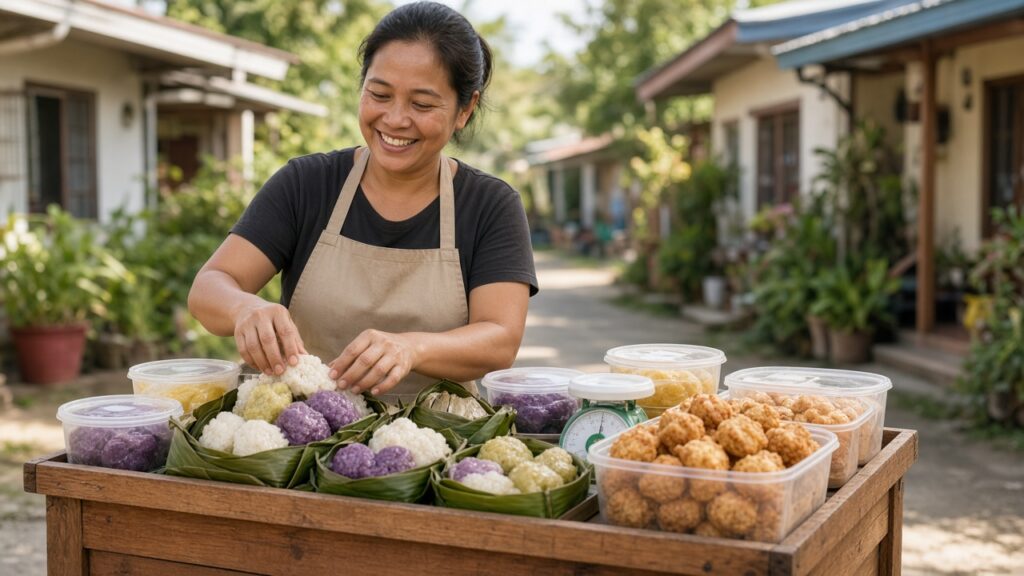
If you sell kakanin in your barangay, run a tiny sari-sari store, fix cellphones at home, or have a skill but no capital, you may have heard about the “DOLE Kabuhayan” program. It is real, it is free to apply for, and it is a grant, not a loan, so you do not pay it back. But it is not quick cash either. It comes as tools, equipment and starting materials for a livelihood project, and it goes through an evaluation process.
This guide explains what the DOLE Integrated Livelihood Program (DILP), also called the Kabuhayan Program, gives, who qualifies, how much assistance is possible, and how to apply without falling for fixers.
What is the DOLE Kabuhayan Program?
The Kabuhayan Program is the livelihood part of the DOLE Integrated Livelihood and Emergency Employment Program (DILEEP). The other part is TUPAD, the short-term emergency employment program. According to the official DOLE Kabuhayan page, the program aims to reduce the vulnerability of poor, vulnerable and marginalized workers by giving them grant assistance to start or build livelihood ventures, either individually or as a group.
The DOLE Region 1 DILP page lists three program components:
- Kabuhayan Formation helps qualified beneficiaries start an individual or group livelihood.
- Kabuhayan Enhancement helps existing livelihoods grow into more sustainable enterprises.
- Kabuhayan Restoration helps people rebuild livelihoods lost to disasters or other crises.
What do beneficiaries actually get?
Based on DOLE’s program description, qualified beneficiaries can receive:
- Working capital in the form of raw materials, equipment, tools and jigs, and other support services needed for the project.
- Training on how to plan, set up, start and run the livelihood, including entrepreneurship, business management and productivity.
- Enrollment in GSIS Group Personal Accident Insurance (DOLE Region 1 says this covers one year).
- Continuing technical and business advisory services so the business keeps going.
In practice, many beneficiaries receive a starter kit. For example, a vendor might get a food cart, cooking equipment and initial stock rather than cash in hand. That is by design: the grant is meant to build a working business, not to cover household bills.
How much assistance can you get?
The amount always depends on what your project actually needs, and the figures below are maximums, not automatic amounts.
Individual projects
The DOLE central Kabuhayan page says individual beneficiaries can avail of a Starter Kit or Negosyo sa Kariton (Nego-Kart) worth up to ₱20,000, depending on the project requirement. The DOLE Region 1 page lists a Starter Kit or Livelihood Kit of up to ₱30,000. Because the published caps differ, ask your DOLE provincial or field office which ceiling currently applies in your area.
Group projects
Both DOLE pages list the same caps for organizations:
- Micro Livelihood: 15 to 25 members, up to ₱250,000.
- Small Livelihood: 26 to 50 members, up to ₱500,000.
- Medium Livelihood: more than 50 members, up to ₱1,000,000.
Groups must have a Project Management Team and a profit-sharing scheme written into both the business plan and the Memorandum of Agreement (MOA) with DOLE.
For a real-world sense of scale, the Philippine Information Agency reported that 34 vendors in Ramon, Isabela received a combined ₱1.03 million in Kabuhayan assistance on November 3, 2026. Their projects included mini retail stores, street food vending, rice retailing, a panciteria, crochet handicrafts and duck raising with salted egg production.
Who qualifies?
The DOLE Region 1 page lists eligible beneficiaries that include:
- Self-employed workers who cannot earn enough income
- Unpaid family workers
- Low-wage and seasonal workers
- Workers who were displaced or are about to be displaced
- Marginalized and landless farmers
In March 2026, DOLE said its updated guidelines under Department Order No. 239-B, Series of 2026 expanded coverage to guardians of DOLE-profiled child laborers and micro-entrepreneurs who have undergone DOLE Technical and Advisory Visits. This is on top of groups already covered, such as parents of child laborers, indigenous peoples, TESDA graduates, beneficiaries of DOLE productivity trainings for micro-establishments, and workers’ associations under DOLE’s workers organization program.
If you are not sure where you fit, the simplest step is to ask your local Public Employment Service Office (PESO) at the city or municipal hall. PESOs often help profile applicants and endorse them.
What the grant cannot be used for
DOLE’s March 2026 announcement says Kabuhayan funds cannot be used to buy motor vehicles, and the program also does not fund micro-lending projects or major construction work. So a proposal to buy a tricycle, start a “5-6” lending business, or build a big structure will not pass. Keep your plan focused on tools, equipment, materials and working capital.
Examples of projects that fit
DOLE favors projects aligned with local development priorities and key employment generators such as agribusiness, health and wellness, eco-tourism, manufacturing, wholesale and retail trade, and local industries. Practical examples for Filipino households include:
- Food vending: kakanin, turon, banana cue, siomai or a small carinderia setup
- Rice, frozen goods or dried fish retailing
- Sari-sari or mini retail store stocks and shelves
- Tailoring, dressmaking or crochet with sewing machines and materials
- Repair services such as cellphone, appliance or bicycle repair with tools
- Backyard livestock or poultry such as duck raising, if your area allows it
Requirements
Exact requirements vary by region and by whether you apply as an individual or group, so get the official checklist from your DOLE office. Commonly requested documents include:
- Letter of intent addressed to the DOLE Regional Director
- Beneficiary profile with a 1×1 ID photo
- A project proposal or simple business plan showing what you will sell, the costs and expected income
- Valid government ID and barangay certification or proof of residency
- For groups: proof of registration of the organization, list of members, and the profit-sharing arrangement
How to apply, step by step
- Visit your PESO or DOLE office. Go to your city or municipal PESO, or the nearest DOLE Regional, Provincial or Field Office. Ask if the Kabuhayan Program is accepting applicants and whether there are funds available this year.
- Attend the orientation. DOLE or its partner usually explains the rules, the allowed projects and the documents needed.
- Prepare a realistic proposal. List exactly what you need (for example, a cart, a two-burner stove, containers and first-week ingredients), the price of each item, and how you will earn and sustain the business.
- Submit your documents. Many applications go through an Accredited Co-Partner (ACP) such as an LGU, cooperative, people’s organization or school. The ACP helps package and monitor projects.
- Wait for evaluation. DOLE checks if you qualify and if the project is viable. Approval depends on available funds, so it can take weeks.
- Receive the assistance and run the business. Expect monitoring visits. Using the kit properly can help you qualify for enhancement assistance later.
Tips to improve your chances
- Start with something you already know. DOLE looks for viable projects, and experience shows it.
- Keep the budget honest. Canvass prices from local stores and do not pad the list.
- Show where your buyers are. A school nearby, a tricycle terminal, a market day: mention them.
- Keep simple records. Even a notebook of daily sales and expenses helps during monitoring.
Watch out for fixers and fake “DOLE” pages
Applying for Kabuhayan is free. Be careful with anyone who asks for a “processing fee,” a share of your grant, or your personal details through a random Facebook page or group chat promising guaranteed approval. Deal only with your PESO, an official DOLE office, or a recognized accredited co-partner. If you encounter a scam, see our guide on how to report an online scam in the Philippines.
Also remember that a livelihood grant does not guarantee income. Your earnings will depend on your product, your location, your effort and your costs. Start small, track your sales, and reinvest wisely.
Related programs to check
- If you need short-term work right now, read our guide to DOLE TUPAD.
- If you need a small loan for an existing business, see our explainer on the SB Corp P3 loan.
- Planning to grow your small business? Check BMBE registration for possible tax exemption.
This article is general information only and not financial advice. Rates, rules and fees change, so please verify with the provider or the official agency before deciding.