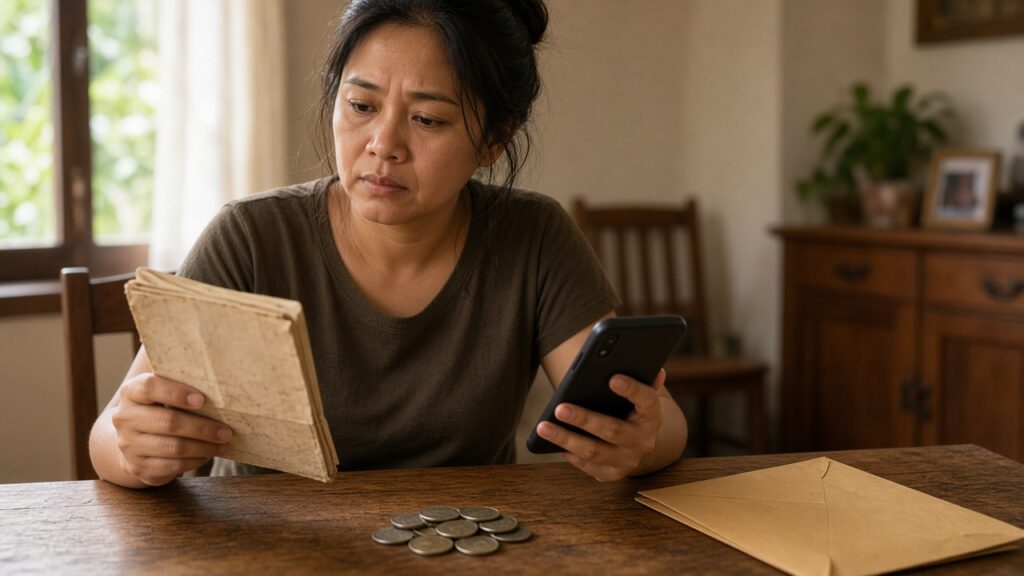
Almost every Filipino has one: the payroll account from your first job, the savings account your parents opened for you in high school, or a digital bank account you tried once during a promo and forgot. Months pass, then years. One day you remember it and wonder if the money is still there. The answer depends on how long the account has been sleeping. This guide explains what happens to a dormant bank account in the Philippines, when fees can start, when the government can take over unclaimed money, and how to wake your account up before that happens.
What makes a bank account “dormant”?
Under the Bangko Sentral ng Pilipinas (BSP) rules in BSP Circular No. 928 (2016), an account is classified as dormant when it shows no deposit or withdrawal for a set period:
- Savings account: no deposit or withdrawal for two (2) years.
- Current or checking account: no deposit or withdrawal for one (1) year.
Dormancy is a status, not a penalty by itself. Your money is still yours and still in the bank. But a dormant account usually cannot be used normally. For example, Maya Bank’s savings terms say dormant accounts do not earn interest and cannot send or receive transfers until they are reactivated. Other banks have their own terms, so check yours.
One important detail: what counts as “activity” is a deposit or withdrawal that you make. Interest credited by the bank or a fee deducted by the bank generally does not count as your activity. Maya’s terms, for instance, specifically mention a “client-initiated deposit or withdrawal.” Simply logging into the app or checking your balance may not be enough, so do an actual small transaction.
The timeline: 2 years, 5 years, 10 years
It helps to think of a dormant account as moving through three stages. Here is how the BSP rules and the law line up for a typical savings account:
| Time since your last deposit or withdrawal | What can happen |
|---|---|
| About 1 year and 10 months | The bank must notify you at least 60 days before the account becomes dormant. |
| 2 years | The savings account is classified as dormant. |
| 5 years | The bank may start charging a dormancy fee, but only under strict conditions (see below). |
| 10 years | The balance can be reported as an “unclaimed balance” to the Treasurer of the Philippines and may be escheated (turned over) to the government. |
Dormancy fees: what banks are allowed to charge
Many people fear that a forgotten account will be “eaten” by fees. There are limits. A BSP memorandum reminding banks of Circular 928 (Memorandum No. M-2017-025) says banks may only impose a dormancy fee five years after the last activity, and only if all of these apply:
- The balance is below the required minimum monthly average daily balance (ADB), if the account has one.
- The monthly dormancy fee is not more than ₱30.
- The bank sent you the required notices: one at least 60 days before the account became dormant, and another at least 60 days before the dormancy fee starts.
So if you left ₱1,500 in a savings account with a ₱2,000 maintaining balance, the bank may separately charge a below-minimum-balance fee based on your account terms, and after five years of inactivity it may also charge a dormancy fee of up to ₱30 a month. Over a few years, a small balance can shrink to zero. That is why it pays to deal with old accounts early instead of “saving them for later.”
Fees and maintaining balances differ per bank and per product. Check your bank’s current fee schedule or ask customer service for the exact amounts that apply to your account.
Unclaimed balances: when the government can take your money
The Unclaimed Balances Act (Act No. 3936) covers deposits “in favor of any person unheard from for a period of ten years or more.” Banks must submit a sworn list of these accounts to the Treasurer of the Philippines, and the balances can then be escheated, meaning turned over to the government through a court process.
The BSP rules add protections for you. The bank must notify you at least 60 days before it files its sworn statement listing your account for escheat. The dormancy notice itself must also remind you that the account will be included in the unclaimed balances list if it has no activity for ten years.
The takeaway is simple: ten years of silence is the danger zone. Before that point, recovering your money is usually a matter of visiting the bank with your ID. After a court has ordered the money escheated, getting it back becomes much harder.
Why notices often never reach you
Banks are required to send notices to your last known postal address, email or mobile number. The problem is that many Filipinos move, change SIM cards or stop using an old email. If the bank still has your college dorm address or a number you no longer use, the notices are sent but you never see them. Updating your contact details with every bank you have an account with is one of the easiest ways to protect forgotten money.
How to reactivate a dormant bank account
Each bank has its own process, but it usually looks like this:
- Find your account details. Look for an old passbook, ATM card, bank statement, email or text alert. Even just the branch where you opened it helps.
- Contact the bank first. Call the hotline or message the bank’s official app or website to ask whether the account is still open and what it needs for reactivation. Use only contact details from the bank’s official website, not numbers from social media comments.
- Prepare valid IDs. Banks may ask you to update your records and submit current identification, such as your PhilSys National ID, passport or driver’s license. Maya’s terms, for example, say reactivation may require you to resubmit due diligence documents like updated IDs.
- Visit the branch or follow the app process. Traditional banks often require you to visit, sometimes the branch where you opened the account. Digital banks usually handle it in the app or through customer support.
- Make a transaction right away. After reactivation, make a deposit or withdrawal. Some banks require it within a set period, or the account stays dormant.
- Update your contact details. Give your current address, mobile number and email so future notices reach you.
Should you keep it or close it?
Once your account is awake, decide if it still has a job in your finances. Keep it if it is useful, for example as a separate account for your emergency fund or a no-maintaining-balance account you actually use. Close it if it has a maintaining balance you cannot meet, keeps charging fees, or simply adds clutter.
If you want a simple, low-cost account, look at a Basic Deposit Account, which can be opened with as little as ₱100, or a digital savings account like the ones in our GCash GSave and Maya Savings guide. When moving money between banks, use InstaPay or PESONet wisely to avoid unnecessary charges; our guide to transfer fees explains how.
Simple habits to keep accounts from going dormant
- List all your accounts. Write down every bank and e-wallet account you have, including old payroll accounts. Review the list once a year.
- Set a yearly “account check” reminder. Pick a date, like your birthday, to make a small deposit or withdrawal in each account you want to keep.
- Help parents and lolos and lolas. Older relatives often have passbook accounts they have not touched in years. A short visit to the bank together could recover money they forgot about.
Watch out for “unclaimed money” scams
Scammers sometimes send texts or messages claiming you have unclaimed bank money and asking for a “processing fee,” your OTP or your online banking login to release it. A real bank will not ask you to pay a stranger or share your OTP to reactivate your account. Deal only with the bank directly through its official channels. If a bank does not resolve your concern properly, you can escalate it; our guide on how to file a complaint with the BSP walks you through it.
Quick summary
- A savings account becomes dormant after 2 years without a deposit or withdrawal; a checking account after 1 year.
- Banks may charge a dormancy fee only after 5 years of inactivity, if your balance is below the minimum ADB, after giving notice, and at no more than ₱30 a month.
- After 10 years without activity, the balance can be reported as unclaimed and escheated to the government.
- Reactivating usually takes a valid ID, updated records and a fresh deposit or withdrawal.
- Keep your contact details updated with every bank so you actually receive the warning notices.
That old account might hold only a few hundred pesos, or it might hold more than you remember. Either way, it is your money. A quick call to the bank this week is all it takes to find out.
This article is general information only and not financial advice. Rates, rules and fees change, so please verify with the provider or the official agency before deciding.