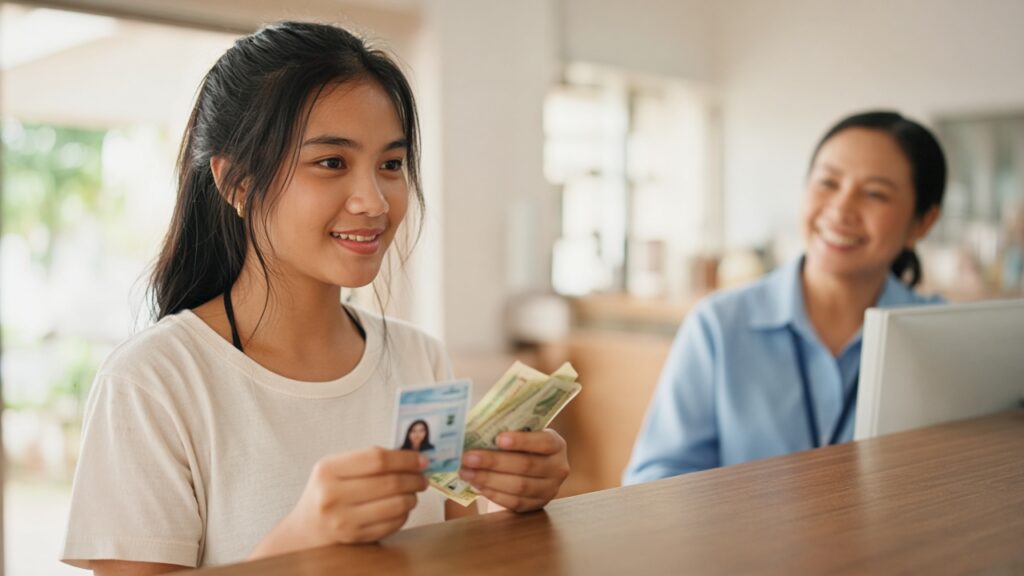
Maraming Pinoy pa rin ang walang bank account. The usual reasons sound familiar: “Wala naman akong malaking pera,” “Mahal ang maintaining balance,” or “Baka ma-charge-an lang ako kapag di ko nagalaw.” If that sounds like you, or a parent, a kasambahay, or a younger sibling who just got a first job, there is a bank product made exactly for this situation: the basic deposit account.
Panoorin: quick video tip
This guide explains what a basic deposit account (BDA) is, the minimum features the Bangko Sentral ng Pilipinas (BSP) requires, its limits, and how to open one. Everything here is based on official BSP, PDIC and government sources as of November 2026. Banks can design their own versions, so always read the bank’s terms before you sign.
What is a basic deposit account?
A basic deposit account is a simple bank account the BSP created through Circular No. 992 (2018) to help unbanked and underserved Filipinos. According to the BSP Manual of Regulations for Banks, Section 213, it is an interest- or non-interest-bearing account meant to let you receive and make payments and keep your money somewhere safe.
Banks can name and package the product their own way. What matters is that it meets the BSP’s minimum features below.
The BSP’s minimum features
Under Section 213 of the BSP manual, any bank offering a basic deposit account must follow at least these rules:
- Opening amount: not more than ₱100.
- Minimum maintaining balance: none.
- Dormancy charges: none.
- Maximum balance: not more than ₱50,000. If you go above that, the bank should convert your BDA into a regular deposit account.
- Simplified KYC: the bank can use simplified “know-your-customer” checks for low-risk clients, so the ID requirements can be lighter than for regular accounts.
In plain terms: you can open it with ₱100 or less, you won’t be penalized for a low balance, and you won’t be charged just because you didn’t use the account for a while.
Things the rules do NOT guarantee
A BDA is friendlier, but it is not “zero fees forever.” The BSP’s FAQs on basic deposit accounts (Memorandum M-2022-003) clarify a few points worth knowing:
- Card or passbook fees are allowed. Banks may charge for an ATM/debit card or passbook, but the BSP says the fee should be reasonable and should not make the account unaffordable. Ask how much before you open.
- Interest is optional. The account can be interest-bearing or not. Many pay little or nothing, so think of a BDA as a safe place for money, not an investment.
- Transaction limits are up to the bank. The BSP framework doesn’t set a limit on how many transactions you can make, but banks can set their own based on their risk assessment.
- How the ₱50,000 cap is measured varies. Banks may use your average daily balance at minimum, but some may use stricter checks like your end-of-day or real-time balance. Ask which one your bank uses.
- Payroll accounts can be BDAs. The BSP allows banks to package or convert salary accounts into BDAs as long as they meet all the minimum features, including the ₱50,000 balance limit.
Other usual bank charges, like fees for using another bank’s ATM or for sending money through InstaPay or PESONet, depend on the bank. Check the bank’s published schedule of fees.
Is my money safe in a basic deposit account?
A BDA is a deposit in a BSP-supervised bank. Deposits in BSP-licensed banks are insured by the Philippine Deposit Insurance Corporation (PDIC). According to PDIC, the maximum deposit insurance coverage is ₱1 million per depositor, per bank, effective March 15, 2025. All your accounts in the same bank, under the same name and capacity, are added together for coverage.
Since a BDA is capped at ₱50,000, the whole balance falls well within PDIC coverage, as long as the bank is a legitimate, BSP-licensed bank. Note that PDIC said the higher coverage does not apply to cooperatives or non-stock savings and loan associations (PIA report).
What ID do I need?
Requirements vary per bank, but here is good news: the BSP has repeatedly told banks to accept the National ID. Under BSP Memorandum M-2025-012, BSP-supervised institutions must accept the National ID in all its recognized formats, including the physical card, the paper form and the Digital National ID, as valid proof of identity “without the need to require another ID,” subject to authentication.
So if you have your National ID (even the printed or digital version), that should be enough for identity purposes. Banks may still ask for basic details like your address, birthday, source of funds and a specimen signature or selfie in the app.
How to open a basic deposit account: step by step
- Pick a BSP-licensed bank near you or with a good app. Rural banks, thrift banks, universal banks and digital banks may all offer BDAs. You can check if an institution is supervised by the BSP using the BSP’s online verifier.
- Ask specifically for a “basic deposit account.” Front-line staff sometimes offer the regular savings account first. Say the words, and ask whether their product meets the BSP basic deposit account features.
- Ask these five questions before signing:
- How much is the opening deposit? (Should be ₱100 or less.)
- Is there any maintaining balance or dormancy fee? (There should be none.)
- How much is the card or passbook, if any?
- Does it earn interest, and how much?
- What happens if my balance goes over ₱50,000?
- Bring your National ID (or other valid ID the bank accepts) and your opening deposit.
- Set up online or mobile banking if available, so you can check your balance and avoid trips to the branch.
- Keep your account details private. Never share your PIN, password or OTP with anyone, including people claiming to be bank staff. Read our guide on how to spot money scams in the Philippines.
Practical ways to use a BDA
A ₱50,000 cap sounds small, but for many households that’s actually the right size for these jobs:
- Your first emergency fund. If your monthly expenses are ₱15,000, even one month of expenses fits comfortably. Start with our step-by-step emergency fund guide.
- A separate “bills” or “ipon” account. On payday, move your savings or bill money here first, so it doesn’t mix with your daily spending money.
- Receiving pay, remittances or government assistance. The BSP designed the account so people can receive income, pensions, benefits and remittances. If you are a parent receiving padala from an OFW family member, a BDA can be a safer place than cash under the mattress.
A quick note on interest and tax
If your BDA earns interest, it is subject to the 20% final withholding tax on peso bank deposit interest. This is automatically deducted by the bank. The uniform 20% rate is in Republic Act No. 12214 (CMEPA), effective July 1, 2025. With small balances and low rates, the actual interest will usually be small, so don’t choose a bank only because of the advertised rate. Fees, convenience and reliability matter more for an everyday account.
If you want your savings to earn more over the long term, look at options like Pag-IBIG MP2 or time deposits once your emergency money is set.
Don’t let it go “dormant” for too long
A BDA has no dormancy charges, but that doesn’t mean you can forget it forever. Under the Unclaimed Balances Law (Act No. 3936, as amended), banks report to the Treasurer of the Philippines deposits of owners who have not made any deposit or withdrawal for ten years or more. These balances can eventually be escheated to the government through a court process. A simple fix: make a small deposit or withdrawal at least once a year, and keep your contact details updated with the bank.
What if the bank refuses or charges you unfairly?
If you believe a bank charged a fee that goes against the BDA rules or treated you unfairly, file a complaint with the bank first and keep the reference number. If it isn’t resolved, you can escalate to the BSP through BSP Online Buddy (BOB), available on the BSP website, Facebook Messenger and the BSP app. See the BSP’s page on where to report.
Bottom line
If you’ve been putting off opening a bank account because of maintaining balances or fees, the basic deposit account removes most of those excuses: ₱100 or less to open, no maintaining balance, no dormancy fees, and PDIC protection. Ask the bank the right questions, read the fee schedule, and use it as the home for your first emergency fund or ipon. Maliit man ang simula, ang mahalaga ay may sariling lugar na ang pera mo.
This article is general information only and not financial advice. Rates, rules and fees change, so please verify with the provider or the official agency before deciding.