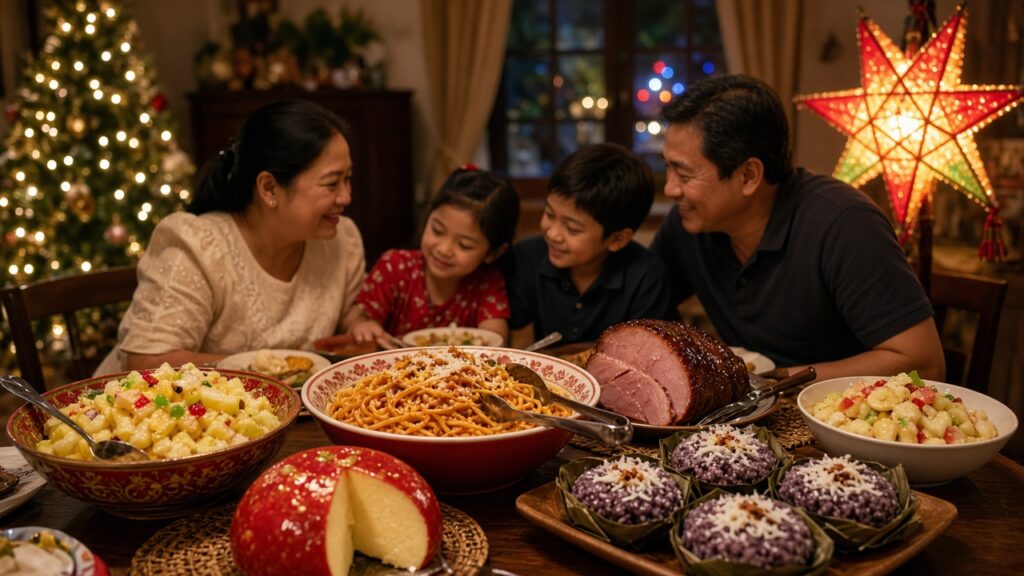
Every December the same question comes up in many Filipino homes: magkano ba talaga ang kailangan para sa Noche Buena? Ham, spaghetti, fruit salad, queso de bola, maybe lechon or barbecue if the budget allows. It is one of the happiest meals of the year, but it is also one of the easiest ways to start January with utang.
This guide shows you how to plan a realistic Noche Buena budget in pesos, using the Department of Trade and Industry’s (DTI) Noche Buena price guide as a reference, plus practical ways to cut costs without making the table feel tipid.
What is the DTI Noche Buena price guide?
Every holiday season, DTI publishes a list of suggested retail prices (SRPs) for the products families usually buy for Christmas Eve: ham, queso de bola, cheese, mayonnaise, sandwich spread, pasta, spaghetti sauce, tomato sauce, fruit cocktail, all-purpose cream, and dessert add-ons like nata de coco and kaong.
The 2025 guide covered 256 holiday food items across 14 categories. According to DTI, 129 items kept their prices, 95 had minimal increases due to higher ingredient, packaging and labor costs, and six items got price rollbacks after talks with manufacturers.
Important for 2026: As of November 20, 2026, the new guide had not yet been released. A DTI MIMAROPA official told the Philippine Information Agency that the central office expects to release the Noche Buena Price Guide within November, following a market survey done in September. Until it comes out, the 2025 figures below are a useful starting point, but expect some prices to be a little higher this year.
2025 Noche Buena SRP ranges (for reference)
Based on the 2025 DTI guide as reported by GMA Regional TV and Inquirer, these were the price ranges per item type:
| Item | 2025 SRP range |
|---|---|
| Ham | ₱170 – ₱945 |
| Queso de bola | ₱210 – ₱470 |
| Cheese | ₱16.50 – ₱310 |
| Mayonnaise | ₱20.40 – ₱245.85 |
| Sandwich spread | ₱12 – ₱263.30 |
| Spaghetti / pasta | ₱27 – ₱116.75 |
| Elbow macaroni | ₱24 – ₱128.15 |
| Spaghetti sauce | ₱25 – ₱108.25 |
| Tomato sauce | ₱16.75 – ₱92.25 |
| Fruit cocktail | ₱61.76 – ₱94.41 |
| All-purpose cream | ₱36 – ₱72 |
| Nata de coco | ₱52.50 – ₱62.50 |
| Kaong | ₱76.50 – ₱84 |
Notice how wide the ranges are. A 500-gram American-style ham at the bottom of the list and a big 1.5-kilo holiday ham at the top are both “ham,” but the price difference is more than ₱700. The size and brand you choose matter far more than which store you go to.
The “₱500 Noche Buena” reality check
In late November 2025, Trade Secretary Cristina Roque said ₱500 could be enough for a simple Noche Buena for a family of four, and the remark drew heavy criticism. She later explained the computation using items from the price guide:
- Christmas ham: ₱170
- Spaghetti: ₱78.50 (₱30 noodles + ₱48.50 sauce)
- Macaroni salad: ₱152.45 (noodles, mayonnaise and cheese)
- Fruit salad: ₱98.25 (fruit cocktail + all-purpose cream)
- Pandesal, 10 pieces: ₱27.75
All of these together add up to ₱526.95. Dropping the fruit salad brings it to ₱428.70, and dropping the macaroni salad instead brings it to ₱374.50.
The honest takeaway: the math works on paper for the cheapest sizes, but it does not include rice, drinks, a main viand like chicken or pork, cooking gas, or condiments you may not already have. A November 2026 price check by Radar also found that some of those exact products now cost a bit more at certain online retailers. So use ₱500 as a “bare minimum” floor for a very small family, not as a target.
How to build your own Noche Buena budget
Step 1: Start with your total, not your menu
Decide how much you can spend before you open the shopping app or walk into the supermarket. Look at your 13th month pay or Christmas bonus and set aside the big needs first: January rent, tuition, bills and your emergency fund. Whatever is left is what you can split among gifts, food and gatherings. Our Christmas budget guide walks through this in more detail.
Step 2: Count heads honestly
The biggest budget mistake is planning for four and feeding ten. List who is really coming: household members, lolo and lola, titos and titas, the cousins who always “dadaan lang.” Then plan portions per person instead of buying “one of everything.”
Step 3: Pick one star dish
Most families do not need ham and lechon and queso de bola and three kinds of pasta. Choose one centerpiece (ham, roast chicken, lechon kawali or a big pot of pork menudo) and build simple sides around it. A home-cooked viand often feeds more people per peso than another imported product.
Step 4: Use a simple worksheet
Write down each dish, its ingredients, the SRP or store price, and the quantity. For example:
| Dish | Ingredients to buy | Price you found |
|---|---|---|
| Main (ham or viand) | Ham or meat, marinade | ₱____ |
| Pasta | Noodles, sauce, cheese, meat | ₱____ |
| Salad / dessert | Fruit cocktail, cream, nata, kaong | ₱____ |
| Rice and bread | Rice, pandesal | ₱____ |
| Drinks | Juice, soft drinks, water | ₱____ |
| Extra (10% buffer) | Forgotten items, price changes | ₱____ |
The 10% buffer is important. There is always a missing can of condensed milk, extra ice, or a price that went up since last week.
10 ways to save on Noche Buena without looking kuripot
- Compare price per gram, not price per pack. A bigger ham may look expensive but cost less per 100 grams. A smaller one may be enough if it is not your only dish.
- Check the DTI price guide before buying. If a store sells a listed item well above the SRP, you can report it. DTI accepts consumer concerns through the 1-DTI hotline (1-384) and [email protected]. Our DTI SRP guide explains how price checking works.
- Buy non-perishables early, fresh items late. Pasta, canned fruit, sauces and cream can be bought gradually in late November and early December, so the cost is spread across paydays. Leave meat, fruit and bread for the last few days.
- Consider store brands. House brands of pasta, cream and fruit cocktail are often cheaper and work fine in mixed dishes like fruit salad or spaghetti.
- Do an ambagan. Ask each family to bring one dish. It cuts the host’s cost and everyone gets to show off their specialty.
- Cook from scratch when you have time. Pre-ordered party trays save effort, but you pay for labor and packaging. If you have a free afternoon on December 24, cooking yourself usually costs less.
- Use the palengke for meat, vegetables and fruit. Supermarkets are convenient for packaged goods, but wet markets can be cheaper for fresh items, especially if you have a suki.
- Skip duplicate carbs. Spaghetti, macaroni salad, pandesal and rice all on one table means a lot of carbs and leftovers. Pick two.
- Plan your leftovers. Ham bones become soup, leftover spaghetti becomes baked pasta, extra fruit salad goes to the ref for Media Noche. Food you throw away is money you threw away.
- Pay in cash or debit, not installment. Avoid putting food on a credit card you cannot pay in full, and never borrow from online lending apps or 5-6 lenders for a single meal. The interest will still be there long after the ham is gone.
Watch out for holiday scams
December is peak season for fake online sellers offering “promo” ham, lechon or grocery bundles that never arrive. Order only from stores or sellers you can verify, avoid paying the full amount upfront to strangers on social media, and be careful with links sent through text or chat. If you get scammed, report it right away to your bank or e-wallet and to the authorities.
The bottom line
A good Noche Buena is not measured by how many dishes are on the table. Set your total first, count your guests honestly, pick one star dish, and use the DTI Noche Buena price guide to spot overpricing. When the 2026 guide comes out, update your worksheet with the new SRPs. A simple, debt-free Christmas Eve is something your January self will thank you for.
This article is general information only and not financial advice. Rates, rules and fees change, so please verify with the provider or the official agency before deciding.