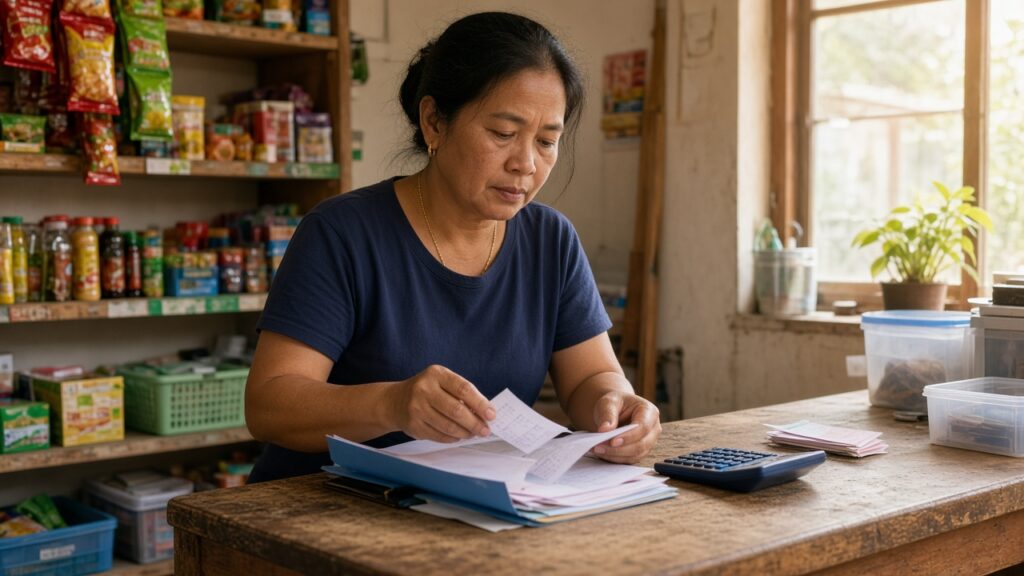
Every December, small business owners in the Philippines go through the same thing. The Christmas rush is finally over, the paninda is almost sold out, and then January hits with one more chore: renewing the business permit, also called the mayor’s permit. If you leave it until the last week, you can end up in long lines at city hall. Miss the deadline and you could pay up to 25% more.
This guide explains when the 2027 renewal is due, what the law says about penalties, what documents you will usually need, and how to make renewal cheaper and quicker. Every city and municipality has its own rules, so use this as a checklist and confirm the details with your local Business Permits and Licensing Office (BPLO).
When is the deadline for 2027?
The Local Government Code (Republic Act No. 7160) says local taxes, fees and charges accrue on January 1 and are paid within the first 20 days of January, or within the first 20 days of each quarter if paid in installments (Sections 166 and 167). That makes the usual renewal deadline January 20, 2027, which falls on a Wednesday.
Some important details:
- Your LGU can extend it. The same Section 167 lets the city or municipal council (sanggunian) extend the payment period without penalties for a justifiable reason, but for no longer than six months. Extensions are not automatic. They only apply if your LGU actually announces one, usually through an ordinance or an official post.
- Paying by quarter is allowed. Section 165 says local taxes may be paid in quarterly installments. Many LGUs let you pay the business tax in parts, but you usually still need to file the renewal and pay the first installment by the January deadline. Ask your BPLO or treasurer’s office how they handle it.
How much is the penalty if you renew late?
Under Section 168 of the Local Government Code, the sanggunian may impose:
- a surcharge of up to 25% of the taxes, fees or charges not paid on time; and
- interest of up to 2% per month on the unpaid amount, including the surcharge, until it is fully paid. Interest is capped at a total of 36 months.
These are the maximums. Your LGU’s revenue code sets the actual rates and decides how a partial month is counted, but many LGUs charge close to the limit.
Sample computation
Say your city assesses ₱8,000 in business tax and regulatory fees for 2027. You renew two months late and your LGU charges the maximum rates:
| Item | Computation | Amount |
|---|---|---|
| Basic tax and fees | Assessed by LGU | ₱8,000 |
| Surcharge | ₱8,000 × 25% | ₱2,000 |
| Interest (2 months) | ₱10,000 × 2% × 2 | ₱400 |
| Total | ₱10,400 |
That’s ₱2,400 extra for a delay you could have avoided, which is enough to restock a small sari-sari store. Operating without a valid permit can also lead to closure orders and other sanctions under your local ordinance, so the cost can be much higher than the surcharge.
Who needs a business permit?
The national guidelines for LGUs, ARTA-DTI-DILG-DICT Joint Memorandum Circular No. 01, series of 2021, say permits are required from individuals, partnerships, corporations and cooperatives regularly doing business for profit in the city or municipality. They also list exemptions, including:
- professionals who have paid their professional tax (but those with a separate office or clinic get a business permit at no cost);
- individuals or one-person corporations that provide personal services and do not occupy a permanent work or retail space;
- service contractors working temporarily outside the LGU where their office is registered; and
- Barangay Micro Business Enterprises registered under RA 9178. See our BMBE registration guide.
If you sell from a physical stall, store, carinderia or home-based shop with a fixed space, assume you need to renew unless your BPLO tells you otherwise in writing.
Documents you will usually need
Under the 2021 JMC, LGUs must use a single Unified Application Form for both new and renewal applications, and they cannot require you to have it notarized. They may only ask for requirements listed in their Citizen’s Charter.
The checklists differ by LGU. As one example, the City of Imus renewal checklist asks for the following, which is typical:
- The accomplished Unified Application Form, which you can get from the BPLO or the LGU website.
- Proof of last year’s gross sales or receipts. This can be a sworn declaration of gross sales, financial statements or your income tax returns. Your 2027 business tax is based on your gross sales for the preceding calendar year (Section 143 of the LGC).
- Barangay clearance, unless it is already integrated into the city’s one-stop shop.
- Your DTI, SEC or CDA registration, if it expired or changed during the year. If you’re a sole proprietor, check your DTI business name registration before you go.
- Clearances for your type of business, such as a sanitary permit and health certificates for food businesses, or market clearance if you operate in a public market.
- An authorization letter and IDs, if someone else will process the renewal for you.
For the Fire Safety Inspection Certificate (FSIC), the DILG-DTI-DICT streamlining standards say that for renewals, the Bureau of Fire Protection informs the LGU whether your FSIC is valid. In practice, many LGUs process this through the one-stop shop, but some still ask for a copy.
How to renew step by step
- Check your LGU’s page or Facebook account in December. Look for the renewal schedule, any extension, the eBOSS link and the current checklist.
- Compute and prepare your 2026 gross sales early. Use your sales records, invoices or filed BIR returns. Declare honestly. Under-declaring can lead to deficiency assessments if the LGU later audits you.
- File online if your LGU has an eBOSS. The 2021 JMC required cities and municipalities to set up an Electronic Business One-Stop Shop that accepts online applications, issues electronic tax bills, takes online payments and releases electronic permits.
- Get your assessment and pay. You can pay at the treasurer’s office or through the LGU’s official online payment channels. Keep the official receipt. Only pay through channels the LGU itself announces.
- Get your permit and display it in your place of business as your LGU requires.
Know your rights: processing time and fixers
The Ease of Doing Business Act (RA 11032) sets maximum processing times once you submit complete requirements and pay: 3 working days for simple transactions, 7 working days for complex ones, and 20 working days for highly technical applications or those that involve public health or safety. If an office fails to act on a renewal within the prescribed time, the law says the permit is automatically extended.
Never pay a fixer to “speed up” your permit. Fixing is prohibited under RA 11032, and a fixer’s receipt is worthless if the LGU does not recognize it. If you meet delays, unlisted requirements or requests for “extra” payments, you can complain to the Anti-Red Tape Authority (ARTA).
What about BIR? One less January fee
Business owners used to pay a ₱500 BIR Annual Registration Fee every January 31. Under the Ease of Paying Taxes Act (RA 11976), BIR stopped collecting it effective January 22, 2024 (RMC No. 14-2024), so you no longer need to file BIR Form 0605 for it. You still have to file your regular returns on time. Our Ease of Paying Taxes Act guide explains the other changes.
Money tips to make renewal painless
- Set up a “permit” sinking fund. Divide last year’s permit cost by 12 and set that amount aside every month. If you paid ₱6,000 this year, that’s ₱500 a month.
- Don’t use your Christmas sales to pay for everything. Set aside your January renewal money before you spend on stock, gifts or the Noche Buena.
- Keep a simple sales record all year. A notebook or spreadsheet makes your gross sales declaration fast and accurate.
- Renew in the first or second week. Lines usually get longest as January 20 gets closer.
- Ask your Negosyo Center if you’re unsure which permits apply to your business.
Bottom line
Renewing your business permit before January 20, 2027 is one of the easiest ways to save money as a small business owner, because it keeps you from paying a surcharge of up to 25% plus 2% monthly interest. Get your gross sales records ready in December, check your LGU’s eBOSS and checklist, pay only through official channels, and keep every receipt.
This article is general information only and not financial advice. Rates, rules and fees change, so please verify with the provider or the official agency before deciding.