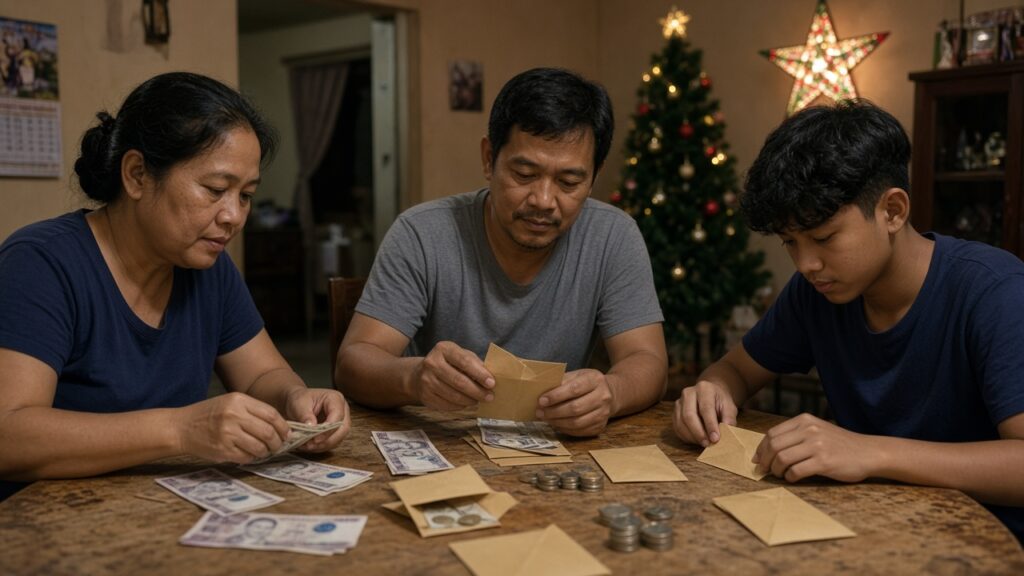
December in the Philippines has its own soundtrack: carols in the mall, the smell of puto bumbong after Simbang Gabi, and the sound of children practicing their lines for ninong and ninang. Pamasko is one of the happiest parts of the season, and also one of the easiest ways to wreck a January budget. The good news is that you can give generously without borrowing, as long as you decide the numbers before the doorbell starts ringing.
Pamasko is tradition, not a legal obligation
There is no law that requires you to give money at Christmas. Pamasko is a custom, and customs are flexible. Your inaanak does not have a legal claim on your wallet, and neither does a distant relative who suddenly remembers your name in December. Once you accept that, the pressure drops and the planning becomes easier.
What you do have is a real obligation to yourself: the bills that arrive in January. Rent, electricity, and the credit card due date do not take a Christmas break.
Set the total before you make the list
Most people do this backwards. They list every ninong, ninang, inaanak, and kapitbahay first, then discover the total is bigger than their 13th month pay. Do it the other way around.
Decide the maximum amount you are willing to spend on pamasko, in cash, and write it down. A practical starting point is 5 to 10 percent of your 13th month pay or Christmas bonus, but the right number is whatever you can spend without touching your emergency fund or swiping a credit card. If your total budget is ₱3,000, that is your ceiling, and the list has to fit inside it.
Sort your list into tiers
Not everyone on your list needs the same amount. Dividing people into tiers keeps the giving fair without making it expensive.
- Tier 1: your own children, and maybe a parent or sibling you support. This is where most of the budget goes.
- Tier 2: inaanak and close nieces and nephews. A fixed amount per child, the same for each, so nobody feels singled out.
- Tier 3: neighbors, coworkers, security guards, garbage collectors, and the people who make your daily life easier. Small cash gifts or food are enough here.
For example, with a ₱3,000 budget you might set ₱1,200 for your own kids, ₱100 each for eight inaanak, and ₱100 each for a handful of neighbors and helpers. Sample amounts like these are just a template; your own income and obligations decide the real figures.
Cash, GCash, or something else
Cash in an envelope is still the most appreciated pamasko, especially for children and older relatives. It is immediate, it needs no smartphone, and it does not expire.
GCash and Maya are convenient for relatives in other provinces, and a transfer with a short message often arrives faster than a remittance center queue. Check the fee screen before you send, since transfers to other banks can carry a charge, and make sure you are sending to the right number. A wrong-digit transfer to a stranger is rarely recovered.
Food, groceries, and practical gifts can stretch a small budget further than cash. A bag of rice, a Noche Buena package, or a set of school supplies can mean more than ₱200 handed over at the gate, and it removes the temptation for the recipient to spend it on something forgettable.
The traps to avoid
The first trap is borrowing to give. Taking a loan or using a buy now, pay later plan so you can hand out pamasko turns a one-day gesture into months of interest. If the budget is not there, give less. Nobody remembers the amount by February, but you will remember the installment.
The second trap is the holiday scam. Every December brings fake GCash cash-in offers, bogus raffle winnings that ask for a “processing fee,” and messages pretending to be from a relative stranded somewhere. Legitimate prizes never require you to send money first, and no bank or e-wallet will ask for your MPIN or one-time password. If a message pressures you to act within minutes, that is the signal to stop.
The third trap is the spontaneous upgrade. You plan ₱100 per inaanak, then you see a nice toy on sale and suddenly it is ₱500 each. Bring only the cash you budgeted, or keep the e-wallet balance at the planned amount, and leave the credit card at home.
Teach children what to do with their pamasko
Pamasko is a natural first lesson in handling money. Instead of letting kids spend everything on the same afternoon, suggest a simple split: half for something they really want, a quarter into a savings account or alkansya, and a quarter for a small gift or treat for someone else. Even a ₱500 pamasko becomes a memorable lesson when a child chooses where each part goes.
For older kids, open a basic deposit account or a digital bank account and let them deposit their share themselves. The habit of saving a portion of every windfall, whether it is pamasko or a first paycheck, is worth more than the amount.
If your budget is tight this year
Some years are leaner than others, and that is normal. A handwritten card, a home-cooked dish, or time spent helping a relative with errands can carry the same warmth as cash. What children remember is the attention, not the denomination.
You can also be honest with your family. Saying “this year is tight, but I wanted to greet you” is far better than borrowing money you cannot repay, and most people will understand. Do not let social media photos of lavish giveaways set your standard.
A quick note on taxes
If your employer gives a Christmas bonus, that amount is tax-exempt only up to the combined ₱90,000 annual limit for 13th month pay and other benefits. Personal pamasko between relatives is a different matter and is generally covered by the donor’s tax exemption for the first ₱250,000 of gifts per year, which ordinary family giving never approaches.
The bottom line
Pamasko should feel like generosity, not like a bill you will pay for until March. Set the total, sort the list, choose cash or a practical gift, and protect yourself from holiday scams. Christmas is a season for giving, and the wisest gift you can give your family is a January without utang.
This article is general information only and not financial advice. Rates, rules and fees change, so please verify with the provider or the official agency before deciding.