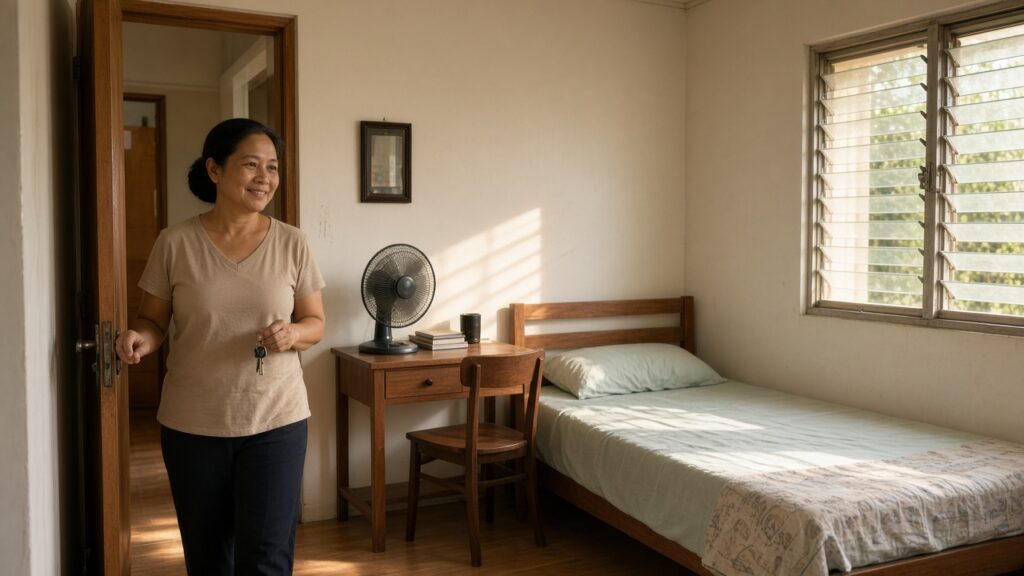
Got a spare room since the kids moved out, or a house near a school, hospital, or business district? Renting out a room or bedspace is one of the more down-to-earth ways Filipino households earn extra income. It is not passive money, though. You are taking on a tenant, house rules, repairs, and some legal and tax responsibilities.
This guide walks you through what to check before you list, how to set a fair rent, what the Rent Control Act says about deposits and increases, how taxes work for rental income, and how to protect yourself and your boarders. Everything legal and tax-related here is linked to the official source so you can double-check it.
Is renting out a room right for you?
Before you post that “Room for Rent” sign, be honest with yourself about a few things:
- Privacy. A boarder shares your kitchen, CR, and sometimes your Wi-Fi. If your family values quiet evenings, a separate unit with its own entrance works better than a room inside the house.
- Location. Demand is usually strongest near universities, hospitals, BPO hubs, and transport terminals. A room far from jobs and schools can sit empty for months.
- Ownership. If you are renting the place yourself, you cannot simply take in boarders. Section 8 of the Rent Control Act of 2009 (RA 9653) prohibits subleasing, including accepting boarders or bedspacers, without the owner’s written consent. Doing it anyway is a ground for ejectment under Section 9.
- Time. You will collect rent, answer messages, fix leaks, and occasionally deal with a late payer. Treat it like a small business, because that is what it is.
Room, bedspace, or whole unit?
There are three common setups in the Philippines:
- Private room. One tenant (or a couple) gets a room with a lock, shares common areas. Easier to manage, fewer people in the house.
- Bedspace. Several tenants share one room, each paying for a bed. Total income per room can be higher, but so are wear and tear, utility use, and the chance of conflicts.
- Whole unit or apartment. A separate studio or apartment door. More privacy for everyone, but it usually needs a bigger upfront investment.
Start with the setup that matches your space and your patience. You can always expand later.
Prepare the space
You do not need a hotel-level room, but tenants expect the basics: a bed and mattress, a cabinet or storage, a working electric fan or aircon, good lighting, a door lock, and access to a clean CR and water. Safety matters more than looks. Check your wiring, avoid overloading extension cords, and keep a fire extinguisher in a common area. If you plan to add rooms or do major renovations, check with your city or municipal hall first, since structural work may need permits.
For electricity, decide early whether rent includes utilities or whether you will install a sub-meter for each room. Sub-meters reduce arguments about who used the aircon all night. If you go the inclusive route, set a clear cap or house rule on appliance use. Our guide on how to lower your Meralco bill has tips you can share with tenants.
How to set a fair rent
There is no official price list for rooms, so research your own area. Browse local listings on Facebook Marketplace, community groups, and rental sites for rooms of similar size, location, and inclusions. Then work out your own costs so you know your floor price.
Here is an example only, using made-up numbers to show the math:
- Asking rent: ₱4,500 per month
- Estimated share of electricity and water you will cover: ₱1,200
- Wi-Fi share, cleaning supplies, and small repairs set aside: ₱500
- Estimated monthly net before tax: ₱2,800
Your real figures will differ. The point is that gross rent is not your income. Utilities, repairs, vacancies between tenants, and taxes all take a cut. Months with no tenant earn you nothing, so budget conservatively and keep a repair fund, the same way you would build a sinking fund for big expenses.
What the Rent Control Act says
RA 9653 and the National Human Settlements Board’s rent control resolution set some rules every landlord should know, especially for lower-priced units.
Advance and deposit limits
Under Section 7 of RA 9653, a lessor of a covered unit cannot demand more than one month advance rent and two months deposit. The deposit should be kept in a bank under the lessor’s name, and interest earned is returned to the tenant when the lease ends, minus amounts for unpaid rent, unpaid utility bills, or damage. Rent is due in advance within the first five days of the month unless the contract sets a later date.
Rent increases for 2026
According to NHSB Resolution No. 2024-01, as reported by the Philippine Information Agency, residential units renting for ₱10,000 or less per month and occupied by the same tenant from 2025 can only be increased by up to 1% for 2026. So a ₱5,000 room with the same boarder can go up to ₱5,050 at most this year.
The resolution also says that when a unit becomes vacant, you may set the initial rent for the next tenant. For boarding houses, dormitories, rooms and bedspaces rented to students, rent may not be increased more than once a year. Units renting above ₱10,000 are outside the cap. The current resolution covers January 1, 2025 to December 31, 2026, so watch for a new issuance from DHSUD for 2027.
Taxes on rental income
Rental income is taxable income, even if it is just one room. Here is how the main rules work for individuals, based on BIR rules:
- VAT and percentage tax. Under BIR Revenue Regulations No. 13-2018, the lease of residential units with a monthly rent of ₱15,000 or less per unit is exempt from VAT, regardless of your total annual receipts, and is also exempt from the 3% percentage tax. For dormitories and bedspaces, a “unit” is counted per person; for rooms, per room.
- Income tax. The exemption above is for VAT and percentage tax, not income tax. You still report the income. As a self-employed individual, you can use the graduated rates or, if eligible and non-VAT, elect the 8% tax on gross receipts in excess of ₱250,000. Our explainer on the BIR 8% tax option and the ₱250,000 zero-tax rule cover this in more detail.
- Registration. Register your rental activity with the BIR, issue official receipts or invoices, and file returns on time. Ask your Revenue District Office or a licensed accountant about your exact requirements.
Many LGUs also require a business or barangay permit for boarding houses and room rentals. Requirements and fees vary by city, so ask your barangay hall and the business permits office directly.
Screen tenants and put it in writing
A good tenant is worth more than a slightly higher rent. Before you hand over the keys:
- Ask for a valid government ID and, for workers, a company ID or certificate of employment. For students, get a parent or guardian’s contact details.
- Meet them in person and show the room yourself.
- Write a simple lease contract covering rent, due date, deposit, inclusions, utility sharing, visitors, curfew if any, pets, smoking, and notice period for moving out.
- Issue receipts for every payment, whether cash, GCash, Maya, or bank transfer.
- Do a move-in checklist with photos so deposit deductions are fair and documented.
Avoid rental scams
Scammers target both landlords and renters. Common tricks include fake “tenants” who send fake transfer screenshots, overpayment scams that ask you to refund the difference, and people who copy your listing photos to collect reservation fees from others. Always confirm payments in your actual GCash, Maya, or bank app, never from a screenshot, and never send money back for an “overpayment” until you have verified the original deposit cleared. Our guide on how to spot money scams lists more red flags.
Bottom line
Renting out a room or bedspace can turn unused space into steady extra income, but the amount depends on your location, costs, and how often the room is occupied. Follow the deposit and increase limits under the Rent Control Act, register and pay the right taxes, screen your tenants, and keep everything in writing. Done right, it is a practical side income built on something you already have.
This article is general information only and not financial advice. Rates, rules and fees change, so please verify with the provider or the official agency before deciding.