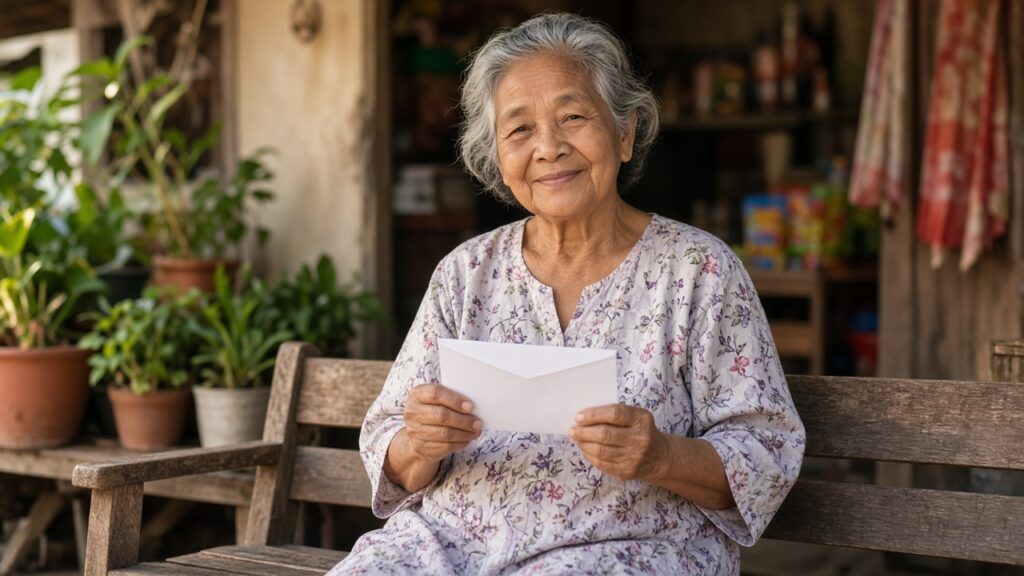
Si Lola Nena is 74. She has no SSS pension because she never had a formal job, her children send money “kapag may sobra,” and her maintenance medicines eat most of what little she gets. For seniors like her, the government has a program that many families still don’t fully understand: the DSWD Social Pension for Indigent Senior Citizens, or SocPen.
This guide explains who qualifies for the ₱1,000 monthly social pension, what you need to apply, how payouts work, and the common myths (and scams) to avoid. If you’re helping a parent or grandparent, this is for you.
What is the DSWD social pension?
SocPen is a monthly cash stipend for poor senior citizens, meant to help with daily food and medical needs. It started under Republic Act No. 9994, the Expanded Senior Citizens Act of 2010, at ₱500 a month. Republic Act No. 11916, which lapsed into law in July 2022, doubled it to ₱1,000 per month starting January 2024, according to the DSWD.
For 2026, the DSWD says SocPen received ₱51.8 billion under the General Appropriations Act, enough to add around 171,000 new beneficiaries from local wait lists on top of replacements for those removed from the roll (DSWD, January 2026). In 2025, the agency says about 4.1 million indigent seniors received their pension.
The program is run by DSWD Field Offices together with local government units (LGUs), so your city or municipal hall and your barangay play a big role.
Who qualifies?
This is the part most people get wrong. SocPen is not for every senior citizen. DSWD has repeatedly said it is only for indigent seniors (DSWD, November 2025). Based on DSWD’s stated criteria, the applicant should be:
- 60 years old or older
- Without a permanent source of income to support daily needs
- Not receiving a pension from SSS, GSIS, the Philippine Veterans Affairs Office (PVAO) or other agencies
- Without regular financial support from family or relatives
DSWD also describes the target beneficiaries as seniors who are frail, sickly or living with a disability. A DSWD officer added that seniors with a small business or unstable income may still qualify under the program’s poverty-related guidelines, so a tiny tindahan doesn’t automatically disqualify Lola. The final decision comes from validation by the LGU and DSWD.
The oldest seniors get priority
Because slots are limited by the budget, there is usually a wait list. Under DSWD’s newer policy, new beneficiaries are drawn from the oldest indigent seniors first, based on the Philippine Statistics Authority’s Community-Based Monitoring System (CBMS) data (DSWD). In practice, a 62-year-old applicant may wait longer than an 85-year-old in the same barangay. Being on the list is not the same as being approved, so set expectations with your family.
Requirements: shorter than you think
According to DSWD, there are only two requirements to register (source):
- A completed Social Pension Application Form
- A National ID or any government-issued ID
DSWD has also clarified that the National ID is not mandatory for payout; any valid government-issued ID can be used (DSWD). Your local office may still ask for supporting papers during validation, such as an OSCA (senior citizen) ID or a barangay certificate, so it helps to bring photocopies just in case.
How to apply, step by step
- Go to your LGU or DSWD Field Office. DSWD says applications may be submitted through local government units or DSWD Field Offices. For most families, the easiest starting point is the Office for Senior Citizens Affairs (OSCA) or the city/municipal social welfare and development office (C/MSWDO) at the munisipyo.
- Get and fill out the application form. Ask the office for the Social Pension Application Form. If Lola can’t write, a family member can help fill it out, but the details must be truthful.
- Submit with a valid ID. Hand in the form with a photocopy of the senior’s government-issued ID. Keep a copy or take a photo of what you submitted.
- Wait for validation. The LGU and DSWD check whether the senior meets the indigency criteria and whether they already receive a pension elsewhere. A social worker may visit or interview the household.
- Get included in the payroll. Approved seniors are added to the beneficiary list as slots open. Ask the OSCA or social welfare office how you’ll be notified, often through the barangay.
Tip: go on a weekday morning, bring a pen, the ID and photocopies, and if the senior has mobility issues, ask the office whether a representative can submit first. Many LGUs also do barangay-level registration, so watch for announcements from your barangay hall.
How and when is the pension paid?
The pension is ₱1,000 per month, but it is usually not released every month. DSWD says the stipend may be given monthly, bi-monthly or quarterly; a May 2024 DSWD memorandum allowed only bi-monthly or quarterly releases if monthly release isn’t feasible (DSWD). In many areas it comes quarterly, which means ₱3,000 per release.
Payouts are typically held at barangay halls, gyms or LGU venues, sometimes with DSWD staff assisting the LGU. As of June 2026, DSWD reported serving more than 3.4 million beneficiaries for the first quarter (DSWD). The schedule varies by city and municipality, so follow your LGU’s official Facebook page or ask the barangay.
Can someone claim it for Lola?
Yes. DSWD says a representative may claim the pension for seniors who can’t personally attend (source). Ask your local office what the representative must bring; usually it’s an authorization letter and IDs of both the senior and the representative. Remember the pension is non-transferable: it belongs to the beneficiary only and can’t be passed on to another family member.
Myths and scams to watch out for
- “All seniors now get ₱1,000 / ₱1,500 a month.” False. DSWD has denied online claims that the pension was raised to ₱1,500, and it has said the program is not universal; only qualified indigent seniors receive it. A universal social pension has been proposed in Congress but is a separate bill, not current law.
- “Pay a fee to be prioritized.” Registration is through your LGU or DSWD. Anyone asking for “processing fees” or a share of the payout to put Lola on the list is a red flag. Report it to your LGU or DSWD.
- “Click this link to register for SocPen.” Be careful with Facebook posts and text messages asking for personal details or OTPs. DSWD advises verifying information only through its official website and social media pages. See our guide on how to report an online scam.
How families can make ₱1,000 a month go further
₱1,000 a month won’t cover everything, but it helps, especially if you stack it with other benefits seniors are entitled to:
- Use the senior citizen discount. The 20% discount and VAT exemption on medicines, groceries and more can stretch the pension. Read our senior citizen and PWD discount guide.
- Get free primary care. PhilHealth’s YAKAP program offers check-ups, lab tests and some medicines. See our PhilHealth YAKAP guide.
- Know where to go for hospital bills. If Lola gets hospitalized, ask about the Malasakit Center in government hospitals.
- Keep it for Lola. Agree as a family that the pension goes to the senior’s own needs, like medicines, food and fare to check-ups, not household utang. A small envelope or a separate e-wallet account just for Lola makes it easy to track.
Quick checklist
- Is the senior 60 or older? ✔
- No SSS, GSIS, PVAO or other pension? ✔
- No permanent income or regular family support? ✔
- Have a government-issued ID? ✔
- Filled out the Social Pension Application Form at the OSCA, social welfare office or DSWD Field Office? ✔
If you checked everything, apply and follow up politely with your LGU. The wait can be long, but for many Filipino seniors, ₱1,000 a month means medicines bought on time and a little more dignity.
This article is general information only and not financial advice. Rates, rules and fees change, so please verify with the provider or the official agency before deciding.