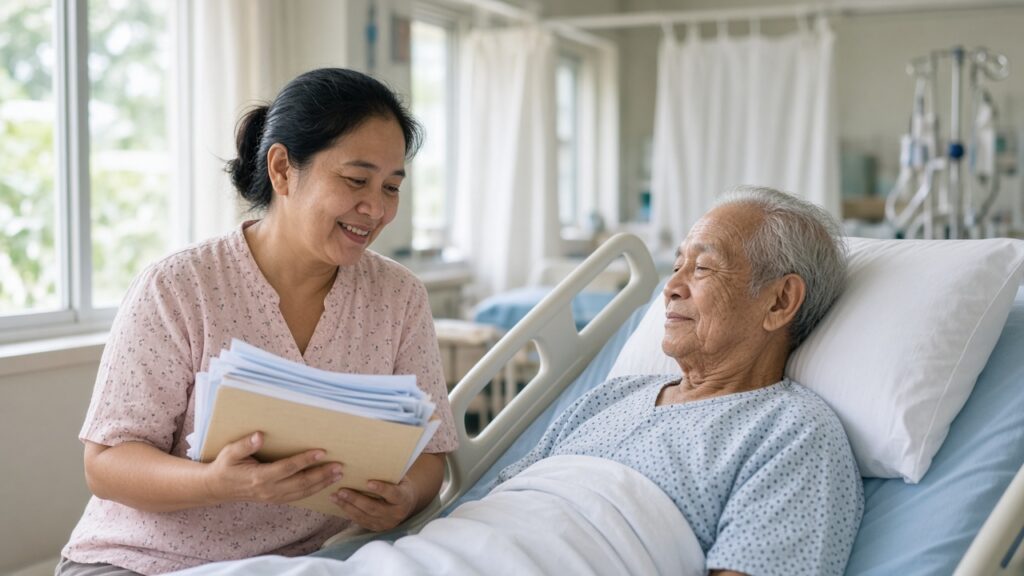
A hospital stay is one of the fastest ways a Filipino family can fall into utang. One confinement can wipe out years of savings, and many families end up borrowing from relatives, pawning gadgets or turning to online lenders just to get a loved one discharged. The good news is that the government already has a system meant to soften that blow: the Malasakit Center, plus the newer zero balance billing policy in DOH hospitals.
This guide explains what a Malasakit Center is, who can get help, what to bring, and the practical steps to lower your hospital bill legally and without paying fixers.
What Is a Malasakit Center?
A Malasakit Center is a one-stop shop for medical and financial assistance located inside government hospitals. It was created by Republic Act No. 11463, the Malasakit Centers Act of 2019.
Before Malasakit Centers, a patient’s family often had to go from office to office: PhilHealth for benefits, then the DSWD, then the PCSO, then the DOH, each with its own line and forms. Under the law, each Malasakit Center must have designated representatives from four agencies working in one place:
- DOH (Department of Health)
- DSWD (Department of Social Welfare and Development)
- PCSO (Philippine Charity Sweepstakes Office)
- PhilHealth
According to Section 8 of RA 11463, the DOH, DSWD and PCSO representatives process and approve requests for medical and financial assistance, while the PhilHealth representative helps you use your PhilHealth benefits and handles PhilHealth-related concerns.
The law also says Malasakit Centers must be free of charge, non-partisan and accessible, and each one must have a special lane for senior citizens and persons with disabilities. You do not need a politician’s endorsement to get help, and nobody should ask you for a “processing fee.”
Where Can You Find One?
RA 11463 requires a Malasakit Center in all DOH hospitals and the Philippine General Hospital (PGH). Other public hospitals run by LGUs, state universities, the DND, the PNP and other agencies may also set one up if they meet DOH standards.
The easiest way to check is to ask the hospital’s information desk or the Medical Social Service (MSS) office, which usually runs the Malasakit Center day to day. Under the law, the head of the hospital’s medical social work office serves as the center’s operations manager.
Who Can Get Help?
The law focuses on two groups of patients:
- Indigent patients – people with no visible means of income, or whose income is not enough for their family’s needs, as assessed by a DSWD, LGU or hospital social worker.
- Financially incapacitated patients – people who are not classified as indigent but clearly cannot pay for treatment, such as those with a catastrophic or life-threatening illness, long confinement or very expensive therapy that would drain their resources, as assessed by the medical social worker.
That second group matters for many middle-income families. You do not have to be “poor on paper” to ask. A regular employee whose child needs a long ICU stay can still be assessed. The law even says financially incapacitated patients in other public and private facilities may still get medical and financial assistance, subject to the social worker’s assessment.
Zero Balance Billing in DOH Hospitals
On top of Malasakit assistance, the DOH now implements zero balance billing for patients admitted in basic (ward) accommodation in DOH-run hospitals. As reported by the Philippine Daily Inquirer in July 2025, Health Secretary Teodoro Herbosa said the policy covers the 87 DOH-run hospitals and applies to everyone admitted in basic accommodation. He advised patients to choose basic accommodation so they will have nothing to pay.
A few important limits, based on DOH statements reported by the Manila Standard and the Inquirer:
- Basic accommodation only. If you ask to move to a private room, zero balance billing no longer applies.
- DOH hospitals only. Not all public hospitals are DOH hospitals. Many are run by LGUs, the DND or GOCCs.
- Four GOCC specialty hospitals are not covered by the zero-billing program: the Philippine Heart Center, Lung Center of the Philippines, National Kidney and Transplant Institute and Philippine Children’s Medical Center. Herbosa said these hospitals still have benefit packages, so ask about them.
- PhilHealth contributions are not a requirement for zero balance billing, according to DOH spokesperson Dr. Albert Domingo, because every Filipino is covered under the Universal Health Care law. DOH hospitals can help unregistered patients through PhilHealth’s Point of Service program.
Policies can change with each year’s budget, so always confirm with the hospital’s billing or social service office on admission.
What to Bring
Requirements vary by hospital and by which agency covers your balance, so ask the social worker for the exact list. As a guide, the DSWD’s medical assistance requirements listed by GMA News include:
- A valid government-issued ID of the patient or authorized representative
- Medical certificate, clinical abstract or certificate of confinement, showing the date issued and the doctor’s complete name, license number and signature
- Hospital bill or statement of account
- Certificate of balance or promissory note
- Social case study report from the hospital’s medical social service, your city or municipal social welfare office, or a registered social worker
Practical tip: put photocopies of IDs, PhilHealth details and the patient’s documents in one folder on day one. Family members take turns at the hospital, and a complete folder saves repeated trips.
Step-by-Step: How to Ask for Help
- Choose basic accommodation if you are in a DOH hospital and want to avoid out-of-pocket costs.
- Go to the Malasakit Center or Medical Social Service office early, ideally soon after admission and not on discharge day. Early assessment gives the desks time to process aid.
- Get interviewed by the medical social worker. Be honest about your income, expenses and the patient’s condition. The social worker classifies the patient and recommends assistance.
- Let PhilHealth benefits apply first. The PhilHealth desk can help confirm membership and coverage. If you are unsure of your status, see our guide to PhilHealth contributions and how to pay.
- Submit documents for the remaining balance. The DOH, DSWD and PCSO desks process requests for medical and financial assistance, often as a guarantee letter applied to your bill.
- Check your final statement of account before discharge and ask the billing office to explain any charge you do not understand.
Watch Out for Scams and Fixers
Because families are desperate during a hospital emergency, scammers take advantage. Keep these rules in mind:
- Malasakit Center services are free. Never pay anyone who promises to “speed up” your guarantee letter.
- Deal only with staff inside the hospital’s official Malasakit or social service office, not people approaching you in the hallway or through Facebook messages.
- Be careful with posts offering “medical assistance” in exchange for a fee, GCash transfer or your OTP. Government agencies do not ask for your one-time PIN.
- Avoid high-interest online lending apps as a first resort. Exhaust government assistance, PhilHealth and discounts first.
Other Ways to Lower Medical Costs
- Senior citizen and PWD discounts apply to many hospital services and medicines. Present your ID at billing and the pharmacy.
- Preventive care through PhilHealth YAKAP can help catch problems early, before they become expensive confinements.
- Generic medicines can cut your pharmacy bill. Read our tips on how to save on medicines in the Philippines.
- An emergency fund is still your best first line of defense. Even a small one helps with transport, food and items not covered by assistance. Start with our guide to building an emergency fund.
The Bottom Line
A Malasakit Center will not make every hospital bill disappear, and assistance depends on assessment and available funds. But for many Filipino families, it is the difference between going home with a manageable balance and going home with a mountain of utang. If someone in your family is admitted to a government hospital, visit the Malasakit Center or Medical Social Service office early, bring complete documents, choose basic accommodation in DOH hospitals if you want zero balance billing, and never pay a fixer.
This article is general information only and not financial advice. Rates, rules and fees change, so please verify with the provider or the official agency before deciding.